When actively engaged in management tasks, I’m unlikely to
stop to take photos. Completing the
activity of the day is usually considered a higher priority than documenting
what I do or see. However, at times when
there are natural breaks in the work, I’m quite likely to pull my little Canon
G11 from its belt holster and capture some of the interesting items that catch
my eye. Most of the photos illustrate
changes that have occurred as a result of my land management activities over
the last few decades. The Little Ladies-tresses,
Spiranthes ovalis, is a good example.
This uncommon orchid was represented at Blue Jay Barrens by only a few
individuals 30 years ago. It is now seen
commonly across dozens of acres each fall.
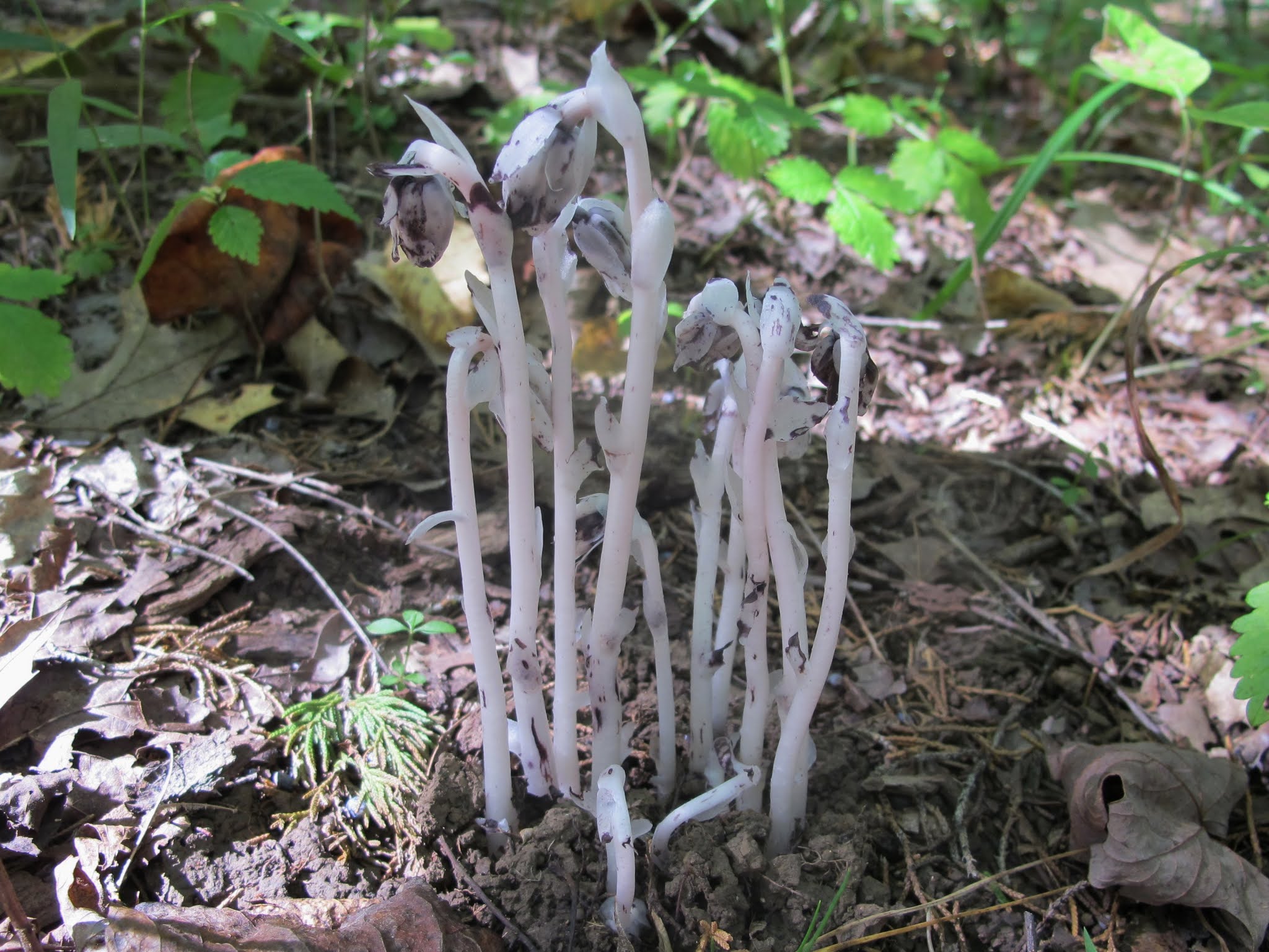
One of my favorite plants, Indian Pipe, Monotropa uniflora,
was in abundance this year. These plants
are parasites on fungi and have no chlorophyll.
The new stalks are bright white and almost appear self-illuminated
against the background of forest floor leaves.

Carolina Buckthorn was once listed as a potentially
threatened species in Ohio. Being a
species of the South-eastern United States, its range just reaches into the
southern counties of Ohio. In 1990 Blue
Jay Barrens supported just two small populations of this species, with one of
those populations consisting of a single individual. With the removal of non-native invasive
shrubs, Carolina Buckthorn seedlings had a chance to become established and
flourish. Mature fruit bearing
individuals are now common and seedlings are coming up everywhere.

Flowering Dogwood was eliminated from the Blue Jay Barrens
woodlands when Dogwood Anthracnose decimated the population in the early 1990’s. A few small specimens survived in the open
fields and have been producing fruit and seed for many years now. Mature dogwoods are finally beginning to
recolonize the woodland. The red and
orange of their autumn leaves is hard to miss.

I’m unsure of the seed source, but young American Beech are
becoming more common in the woods. I’m
happy to see this occurring since one of the historic hardwood mixes in this
area was the Beech-Maple forest. There
is no shortage of Sugar Maple here and it would be nice to see a few mature
Beech mixed in.

Partridge Berry is another species that has expanded its number
greatly in the past few decades.
Historic grazing of cattle in the woodlands is one probable cause of
this plant’s early rarity. The absence
of cattle during the past 35 years has resulted in much improved woodland soil
conditions.

Fungi of many species were apparent this year. One of the most noticeable was this Orange
Fungus, Mycena leaiana. The orange fruiting bodies emerging from
fallen logs rivaled the fluorescent blaze of the brightest hunting jacket.

Above average rainfall coupled with a forest of dead ash
trees results in an abundance of fungi.
I believe this to be a polypore known as Dryad’s Saddle.

I must have appeared as though I was ready to collapse,
because a large mixed flock of Turkey and Black Vultures moved in and began
circling directly above me. It was early
morning, so the most likely explanation for the gathering was the development
of a thermal current allowing the birds to ride the rising warm air to higher
altitudes. These thermals are common in
areas where the rising sun warms bare southeast facing hillsides. I’ve been known to generate a lot of body
heat while working, but I doubt that it’s enough to change the atmospheric
conditions above me.

Except for the early spring breeding congregations, Wood
Frogs are seldom seen. I’ve seen several
during the past couple of months, possibly due to the uncommonly frequent rains
during that time.

Spring Peepers have also been conspicuous this fall. It’s not uncommon to hear a peeper or two
calling on the first few cool days of autumn.
This year has been no exception.

The Giant Cranefly, Tipula abdominalis, is an impressive
insect. The larvae of this species live
in upland streams where they feed on decomposing leaves. Adults are typically found in woodlands, not
far from the streams in which they once lived.

Jumping Bristletails are often referred to as prehistoric
insects because they have remained relatively unchanged since their emergence
approximately 390 million years ago. My
early elementary school days were filled with plans to become a paleontologist,
so anything that may have walked with the dinosaurs still draws my attention.

Wooly Bears are the larva form of the Isabella Tiger
Moth. In my lifetime I’ve seen thousands
of these caterpillars on the ground, in a hurry to get from one place to
another. This photo documents the first
time I have ever seen a member of this species feeding. In this case the caterpillar is feeding on
the upper leaves of a Tall Boneset plant.

This is a female Carolina Leafroller Cricket. These insects are generally considered common,
but seldom seen creatures. Part of the
reason is their nocturnal habit, meaning that their active period is at
night. The rest of the reason is their method
of hiding during the day. As suggested
by the name, the Carolina Leafroller Cricket spends its day rolled up in a
leaf, making it extremely hard to find. This
individual seems to have been slowed down by an unusually cold night, and is
warming itself in the first of the morning sunlight.

The tiny Pygmy Grasshopper is liable to show up anywhere at
Blue Jay Barrens. An adult specimen may
grow to be as much as half an inch in length.
I don’t know that I would ever be successful at finding one by searching,
but chance provides many encounters each year.

I regularly see Northern Fence Lizards, but I don’t always
get out the camera during such encounters.
This time I noticed a fly on the leaf in front of the lizard’s
head. Thinking I had a chance of capturing
an image of the lizard at the moment it captured the fly, I got my camera
ready. Unfortunately, things didn’t work
out as imagined.

The fly flew and the lizard gave me what seems very much
like an accusing look.

Eastern Box Turtles are opportunistic breeders. They have no pheromones or calls to bring a
couple together. Breeding occurs when
two individuals sharing a like mood happen to meet. Females are capable of storing sperm for many
months and using it when needed, so a positive encounter can take place long
before the egg laying season. I’ve seen
an increasing number hatchling Box Turtles during the past few years,
suggesting that the population is doing well.