Showing posts with label Sweet Clover. Show all posts

Monday, December 12, 2016

Invasive Control - Misc Forbs

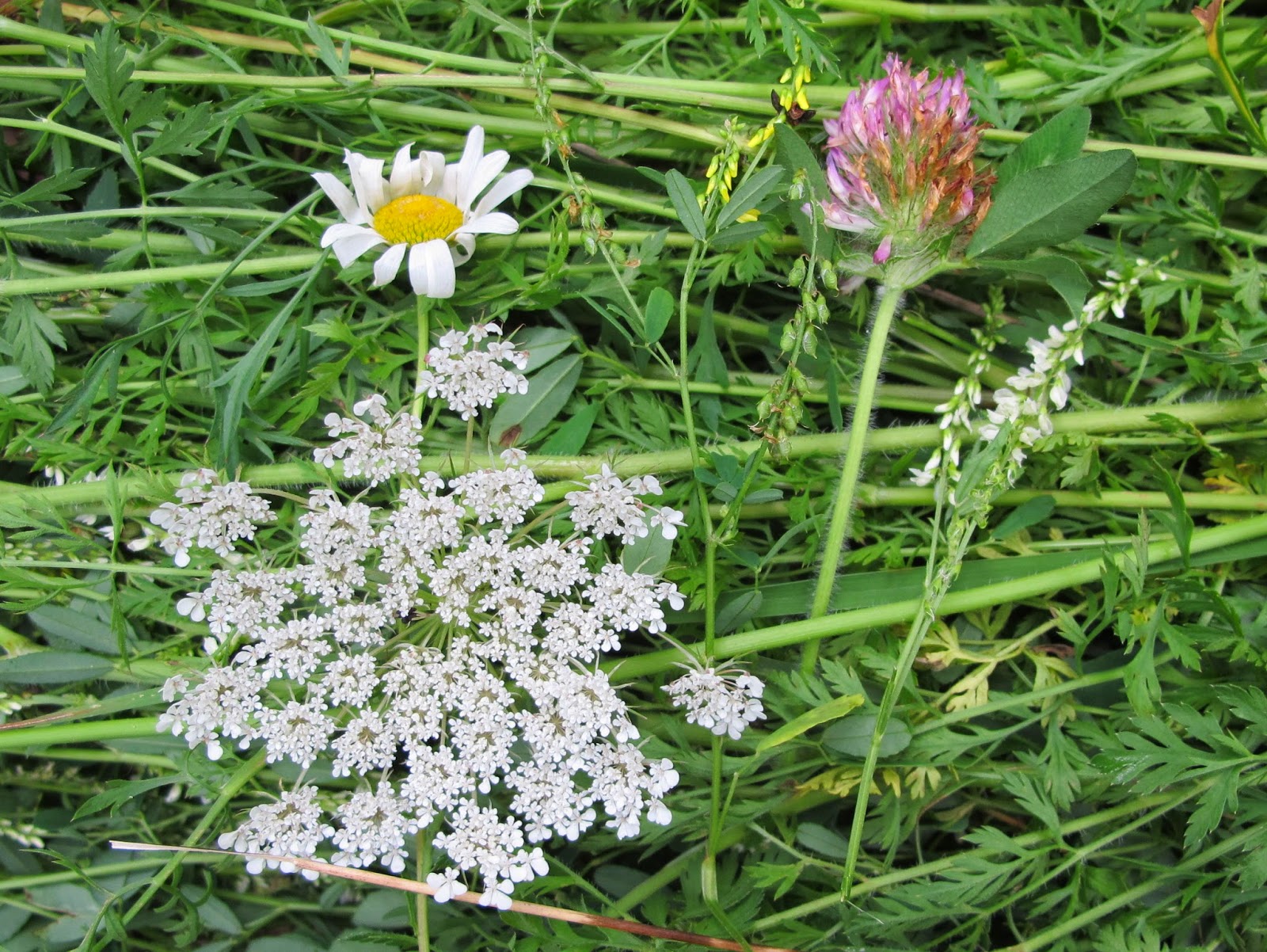
In many instances, the simple task of hand pulling is the most effective way of eliminating unwanted plants.  This pile of invasive Sweet Clover, Wild Carrot and Oxeye Daisy was removed from a one acre barrens opening this past summer.  Remnants of last year’s plant collection can be seen beneath this year’s greenery.

This area is typical of the Blue Jay Barrens openings.  Steep, shallow, extremely dry soils present numerous challenges to plant growth.  Invasive plants can become established, but not with the ease or rapidity demonstrated in the former cropland areas.

The welcome mat for invasive plants is in the form of exposed soil, a defining quality of barrens sites.  A seedling that overcomes the other obstacles can grow undisturbed by competing vegetation.  Colonization may be slow, but a persistent species can build quite a population over a period of years.

This is my fourth year of pulling Sweet Clover and Wild Carrot from this site.  Plant removal is quite an effective control method for these species.  They are biennials that form a rosette in year one, then produce seed and die in year two.  If you can halt the production of seed, you can eliminate new generations of plants.  An annual maintenance visit to each site is still necessary to catch any new plants that may emerge.  Sites that I began treating 10+ years ago, now have only a few Sweet Clover plants per acre and virtually no Wild Carrot.  Sweet Clover seed is notorious for persisting in the soil seed bank and remaining viable for decades after falling from the plant.  In order for the seeds to survive for that length of time, they need to be incorporated within the soil profile where they are protected by the ravages of weather and other environmental factors.  I’ve noticed that most of the studies of Sweet Clover seed longevity have been completed on former crop ground, where fresh clover seed could have been neatly buried by common agricultural tillage practices.  Seed produced on the barrens is unlikely to get buried to a depth that would allow it to be protected for extended periods of time.  The seed here stays near the surface and either germinates or dies, so removing plants rapidly produces positive results.

I’ve also been getting more hands-on with the invasive Oxeye Daisy.

I’m still looking for an effective control method in the old crop fields.  The plant is too numerous and too crowded by prairie plants to be easily removed by hand.  There are also too many quality native plants here to make herbicides a viable control alternative.

This Ragged Fringed Orchid, Habenaria lacera, visible in the center or the preceding photo, is just one of many unassuming plants that has found itself being pressured by Oxeye Daisy.

Oxeye Daisy has been slowly making its way into the barrens.  I hand pulled the daisy from a few test areas two years ago, with favorable results.  This year I pulled Oxeye Daisy right along with the clover and carrot.  New daisy plants begin as a basal rosette.  When they’ve stored enough energy, they send up a flower stalk.

Oxeye Daisy removal is totally effective if you leave no viable plant parts in the soil.  This young plant pulled easily and shows no evidence of missing underground parts.

A slightly older plant displays the start of a rhizome that would eventually give rise to new plants.  The stub of a broken rhizome on a pulled plant means that a viable plant part has been left behind to grow a new plant next year.

A single plant will eventually produce a thick colony of plants.  This plant has a single tall flower stalk and three healthy rhizomes.  I think I’ll be able to successfully eliminate Oxeye Daisy from the more rugged barren sites, but I’m still looking for viable control options in other areas.

I’m still collecting seed heads from Teasel in early August, but I also now treat random plants while I’m out doing other invasive species work.  A shot of glyphosate into the center of a basal rosette will kill the plant, or at least damage it enough that it never produces a flower.  Tall plants can be cut and the stump given a little spray of glyphosate.  These two methods would be difficult to apply on a large scale, but are handy to use when finding a handful of plants in an isolated location.  It’s easier to eliminate the plant at the time it is found, than it is to remember to revisit that spot later on to collect seed heads.

Of course, I’m always interested in animals that feed on invasive plants.  I found this stalk borer inside the base of a tall Teasel plant.  I doubt the borer would have killed the plant, but similar borers might be the reason I occasionally find plants broken off at the base.  These broken plants may lay down and hide in the tall grass, but the flower stalks turn upward and still produce plenty of seeds.  Since I have trouble finding these fallen plants, the borer may actually be hindering my control efforts.  Despite minor setbacks, I’m sure that I can eventually get most of these invasive plants under control.

Monday, August 11, 2014

Pulling Sweet Clover and Other Invasives

During the time of active plant growth in the prairies, I try to avoid management activities that are likely to disturb the Blue Jay Barrens flora.  Jobs such as mowing or the cutting and dragging of brush are performed during the fall and winter, when the plants are in decline or already dormant.  There are some jobs however, that must be done in the middle of the growing season.  One of those is the removal of Sweet Clover from the fields.


Sweet Clover is a tall growing biennial invasive plant that can overtop and out compete many native species.  This prairie opening was once the site of a healthy infestation of Sweet Clover.  Annual removal of the invasive species prior to seed development has resulted in a site that is almost clover free.


Two species of Sweet Clover, White and Yellow, are found at Blue Jay Barrens.  Yellow is the earlier bloomer, but White is not far behind.  The most effective method I have found of dealing with this plant is to physically pull it from the ground.  Clover pulling season begins around the last week of June and continues into late July.  I search through the open field areas and remove every Sweet Clover plant I can find.  This has been an annual activity for several years and in most locations the clover is present only as widely scattered individual stalks.  It’s fairly easy to move around the field and deal with the clover without trampling too much of the surrounding vegetation.  During my first few years of this activity, the clover was so abundant my trampling gave the appearance that a herd of cattle had run through the field.


I also pull a few other invasive species while targeting the Sweet Clover.  Queen Anne’s Lace is another biennial that can be effectively controlled by annual plant removal.  Some people prefer the name Wild Carrot, but I think that name makes it sound like the plant somehow belongs here.  I prefer a name that reminds of its exotic origin.  Now that the Sweet Clover is so reduced in number, I can give more time to removing the Queen Anne’s Lace.  I also pull Oxeye Daisy from the more established prairie areas.  Older Oxeye Daisy plants, those that have begun to send out rhizomes, cannot be pulled without leaving growing bits behind.  During its first year of growth, the plant is composed of a single stalk and its associated root system and can be removed in its entirety.  Hopefully I’ll be able to stop Oxeye Daisy from moving into new territory.


All of the pulled plants are deposited onto one of the established brush piles.  There’s always a chance that some of the plants have been able to develop viable seeds prior to being pulled, so I don’t leave any pulled plants in the field.  If there are seeds in the bunch, they will fall down through the brush pile and have a very poor chance of ever producing a mature plant.


I was particularly troubled to discover Crown Vetch growing in one of the prairie openings.  Crown Vetch is a notorious invasive plant that was once commonly planted on steep road banks.  The road bordering Blue Jay Barrens was so treated in the late 1970’s and I am constantly dealing with Crown Vetch flair-ups in the fields near the road.  The really disturbing part about finding Crown Vetch in this location is the fact that this opening is far from the road and in a watershed that does not come close to the road.  When an invader comes from an identifiable source and travels a particular route, such as down hill or down stream, you can anticipate where it is likely to occur and plan for those events.  An incursion this far outside the predicted pattern makes me fear that Crown Vetch could be a threat to any part of the property.


Crown Vetch is a perennial plant that can not be controlled by pulling.  The stem has a weak point at ground level that allows it to break away rather pull up the roots.  The roots are left in place to grow a new plant.  This is a common feature of many plant species and allows them to survive in areas that receive heavy grazing pressure.  If this infestation was in an old crop field, I would just spray it with glyphosate.  Being in an area that I consider a higher quality prairie, I didn’t want any collateral plant damage.  I chose to clip the Crown Vetch stalks about an inch above the ground and apply concentrated glyphosate directly to the stump. This is a more tedious process, but the result is the death of the vetch and an unblemished prairie.


Some of the old crop fields, especially areas near the house, present a slightly different set of problems.  There is a point where the quantity of Sweet Clover makes hand removal impractical.  If this little corner was the extent of my management area, I could certainly wade in and pull each one of those thousands of clover plants.  This calls for a different management strategy.  In order to reduce the number of clover plants, the plants must be denied the opportunity to produce seed.  An alternative to pulling the entire plant is the removal of the flower.  I accomplished that task on June 16 by mowing this part of the field.


At the time of the mowing, I wondered how much the clover plants would regrow after being cut.  So far, the clover has failed to return.  The native plants, primarily Indian Grass, are regrowing nicely.  Hopefully, mowing will bring the number of Sweet Clover plants down to a more manageable level.


I’m always watchful of biological controls that may be working on invasive plants.  This handsome caterpillar was busy munching away on one of the Yellow Sweet Clover plants.  I identified it as the larva of the Hitched Arches moth.  It appears that this moth eats a wide range of plant species and is not a super Sweet Clover predator.  It may not help me with my task, but it was nice to share the field with this small helper.

Tuesday, July 10, 2012

White Sweet Clover

Invasive plant species control can be practiced year round.  No matter when you decide to tackle the job of eliminating these nasty invaders, there’s a species that is vulnerable to your efforts.  At Blue Jay Barrens, June and July constitutes Sweet Clover season.  The target is Yellow Sweet Clover, Melilotus officinalis, and White Sweet Clover, Melilotus alba.  Both of these species are a problem on the prairies, but a little effort can greatly reduce their numbers.

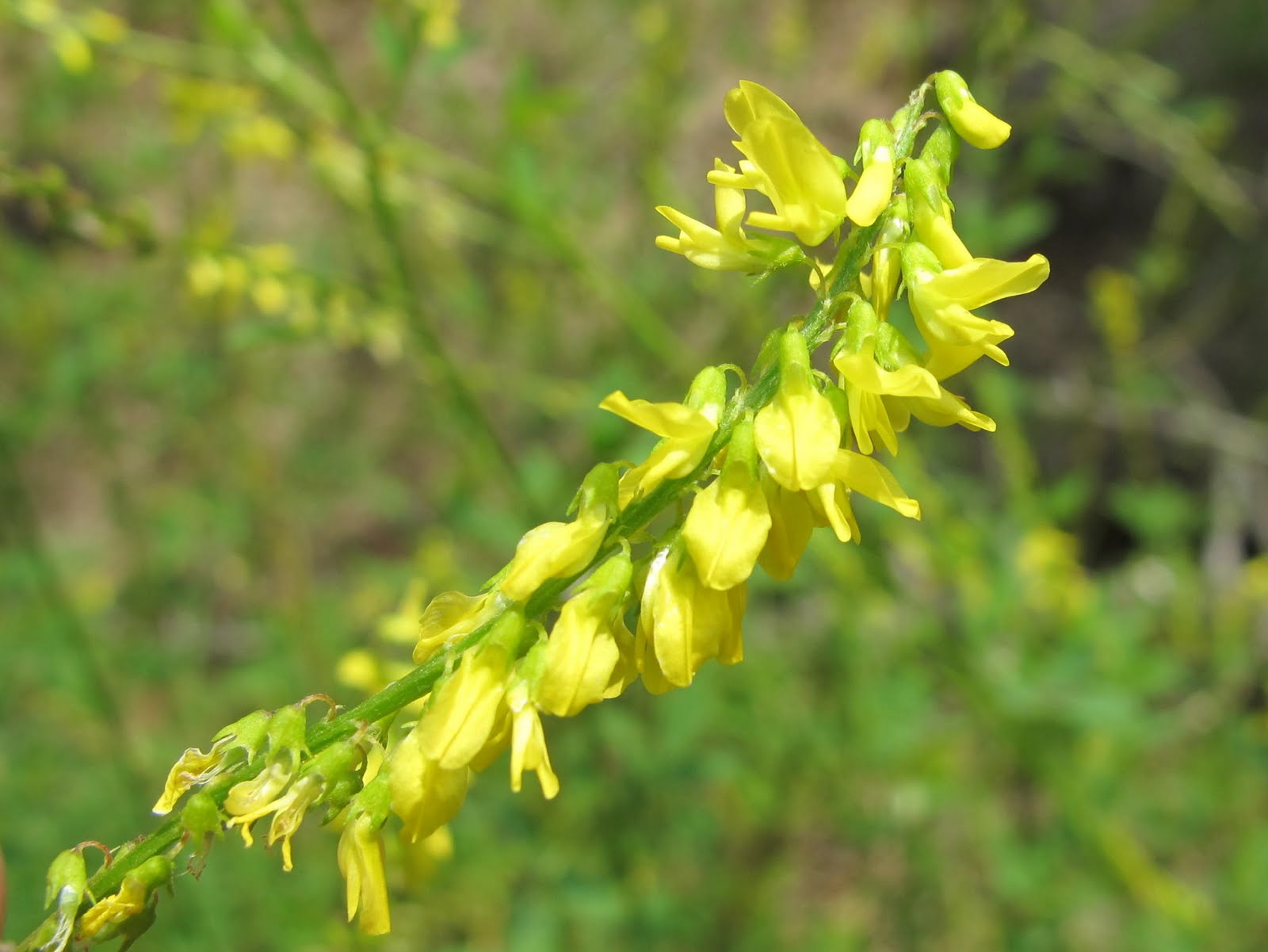
Yellow Sweet Clover usually produces its yellow flowers in June.  It produces a shorter, more compact plant than the White Sweet Clover.  I’ve discussed the Yellow Sweet Clover before and am happy to report that it has been eliminated in many areas.  White Sweet Clover, which blooms several weeks after the Yellow, was here prior to my purchase of the property and is also slowly losing ground due to my control efforts.  Both species are effective competitors and can reduce the number of native species on a site.

The blooms are miniature nectar factories and attract a large number of insect species.  Beekeepers often plant Sweet Clover to support their Honeybee hives.  The plant was also once highly recommended by government conservation agencies as a high quality conservation cover.  Fortunately, native plants are now more often recommended for that purpose.

Sweet Clover is a biennial that produces a deep taproot during its first year.  During year two it flowers, produces seed and dies.  Its ability to utilize atmospheric nitrogen and draw moisture from deep soil areas gives it an advantage in dry, low fertility soils.  The most effective control method is to physically pull the plants from the ground.  After a couple of years, the amount of viable seed left in the soil is greatly reduced and the work required to keep the site clover free is much easier to accomplish. 

A deep tap root is particularly advantageous in the drought conditions we are currently experiencing.  This is normally a tough plant to pull when the ground is dry, but our extremely dry conditions have proven to be an exception to that rule.  These soils have not seen any penetrating rains for two months and have dried to a much deeper level than normal.  The presence of clay in the soil profile has caused the drying soil to shrink and pull away from the Sweet Clover roots.  This soil shrinkage is the same phenomenon that causes cracks to form in the ground.  As a consequence, the roots have lost most of their anchorage and easily pull from the ground.

As hot as it’s been, these pulled plants will be dry and crispy in just a few days.  Pulling out the root eliminates regrowth of that plant.  Even if a pulled plant separates at ground level, the ability of the remaining root to produce flowers and seeds is severely compromised.  The only negative I’ve found to performing Sweet Clover control is the fact that it coincides with Chigger season at Blue Jay Barrens and Chiggers seem to thrive in the vicinity of Sweet Clover. 

Wednesday, June 15, 2011

Sweet Clover

Yellow Sweet Clover, an invasive non-native plant species, has a special place in the history of my management efforts at Blue Jay Barrens. When I first bought the property, I didn’t know anything about Barrens ecology or remnant prairie communities or Southern Ohio plant rarities. In my initial quest for management advice, I was told by two different government agencies dealing in land management that I should broadcast Yellow Sweet Clover seed in all of the bare areas. I now know that this was sound advice if the goal was to control erosion and provide some herbaceous cover, but it was a terrible thing to do if you’re managing for native plant communities.


Yellow Sweet Clover will grow in poor ground and its ability to form a dense canopy allows it to shade out other plants. This makes it tough competition for many native plants. I shiver when I think of the millions of Sweet Clover seeds I spread across the barrens. Fortunately, things didn’t end in total disaster. Since I’m not a very trusting person, I only spread clover seed on a few of the barrens. Right or wrong, I wanted to see the results for myself before fully embracing the activity. Luckily for me, the result was an almost complete failure that I was later able to consider a success. Seedlings developed, but they all died. I’m glad it worked out that way even though I’m not sure why they died.


Things are fairly open beneath the clover canopy. Conditions are ideal for the growth of Sweet Clover seedlings. This is a biennial plant, so this year’s seedlings are next year’s flowering plants. After producing seed, the plant dies.


The flower spikes will produce an abundance of seed. The seeds can survive in the soil for up to ten years before germinating. This means that you have to eliminate the clover plants each year for a decade before you can begin thinking that you might have cleaned up the site.


The positive aspect of this plant is its ability to produce an abundance of nectar which attracts a wide array of bees, butterflies, moths, beetles and flies. Replacing a stand of Sweet Clover with a mix of native species will reduce the nectar supply, but will ultimately be a benefit to native animal populations. For instance, most moths and butterflies benefit more by having host plants on which to deposit their eggs than they do by having a food source.


After my failed attempt to make Blue Jay Barrens a Sweet Clover Heaven, I noticed that there were a few areas of clover infestation scattered across the property. It made me feel good that the incidence of Sweet Clover was about the same in the areas I had seeded as it was in the areas I had avoided. Control of Sweet Clover is not a high priority right now, but I try to clean up isolated infestations when I can. Pulling during peak flowering time seems to be the most effective control method.


At this stage the seed development isn’t far enough along for the pulled plant to produce any viable seed as it dries. I try to put the pulled plants somewhere that they won’t smother any natives. There have been times when I’ve carried the plants all the way back to the house and put them on my compost heap. This time I just laid them on an old cedar skeleton. I can’t see a Sweet Clover plant without thinking my early management blunder. I like to think that I’ve done enough positive management since to make up for those early years.