There are a sufficient number of invasive plant species at
Blue Jay Barrens to allow me to perform control work at any time of the
year.
Each species has a season in which
it is most susceptible to some type of control strategy.
August is the time for Teasel control.
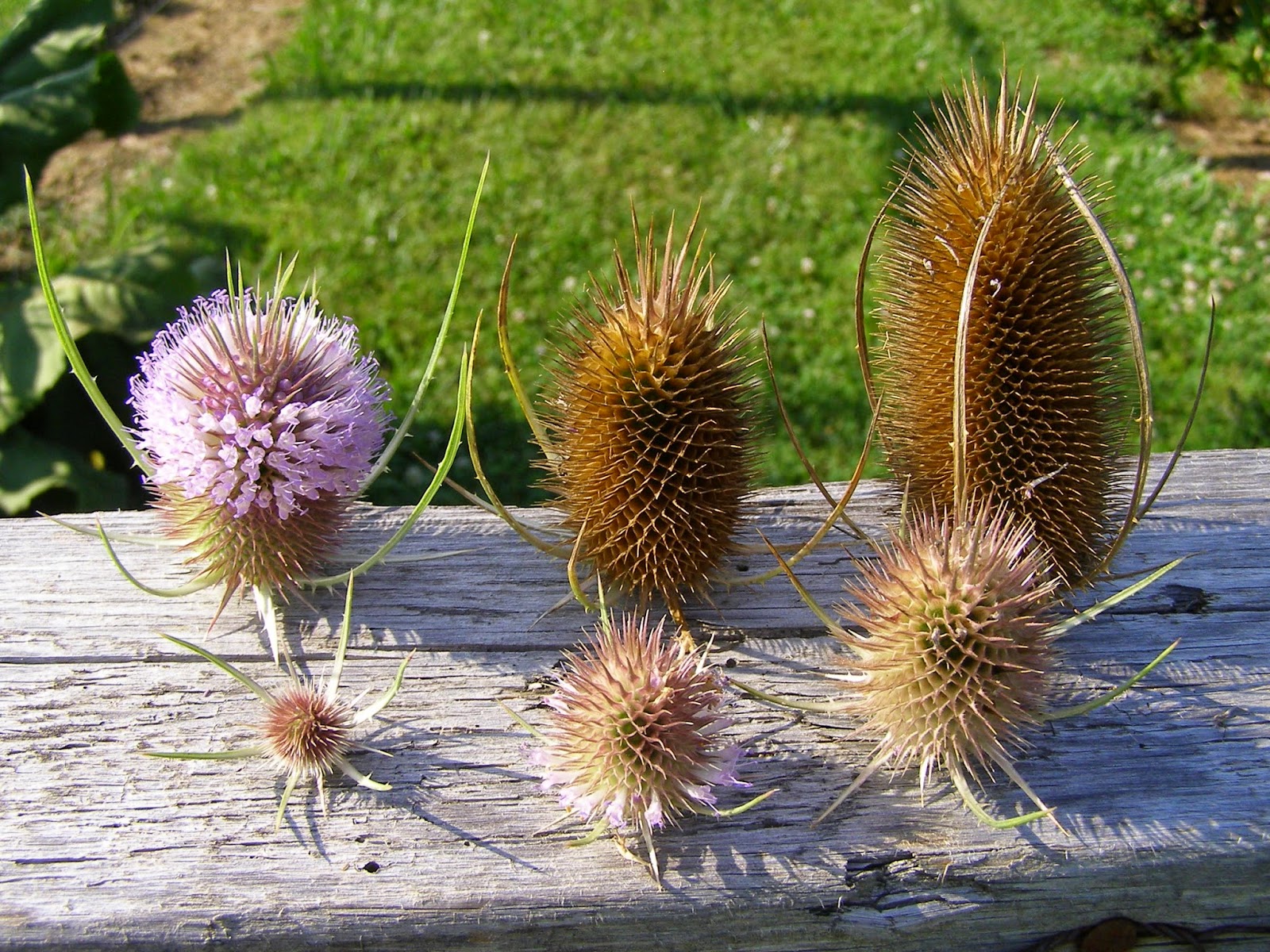
Teasel is a tall, spiny plant topped by a
head of purple flowers.
The flowers fall
away leaving a bristly cone full of seed.
The most effective means I have of eliminating this plant is to harvest
the seed heads before they can release the mature seed.
A split seed head reveals rows of nearly mature seed.
At this stage of development, the seed is
held tightly in place.
In another week
of two, the seed head will dry and the seed will be free to fall.
Movement of the plant stalk by wind or animal
will cause the seed to scatter over the surrounding area.
Teasel is a biennial plant that dies after producing
seed.
By removing the seed heads prior
to seed dispersal, the species is denied future generations.
The local population is reduced to scattered
plants after just a few years of seed collection.
It can still take several more years before
viable seed left in the soil has all germinated.
Missing a single year of seed collection
could result in the release of fresh seed and a resurgence of Teasel in the
field.
The tall prairie grasses are just beginning to send up
flower stalks, so the Teasel is about the tallest plant in the field and fairly
easy to see.
I drop the seed heads into
a bucket as they are gathered and then empty the bucket into a feed sack such
as that seen in the center of the photo.
I also use the feed sack as a reference point that allows me to
coordinate my search so no part of the field is missed.
When doing work like this it is important to
stay oriented so you can conduct a thorough search.
Just wandering around will result in missed
plants and unsatisfactory results.
Occasionally, clusters of plants are found.
This usually means that there was some type
of ground disturbance that allowed multiple seedlings to prosper.
An abandoned ant hill was responsible in this case.
The loose bare soil was perfect for invasive
plants.
In some of these places, the first year rosettes are growing
at the base of the dying Teasel stalks.
Those rosettes will be flowering plants next year.
The rosettes can be easily killed by spraying
a little bit of glyphosate on the growing point in the center of the plant, but
I won’t use that treatment here.
There’s
no way I can locate all of those rosettes hidden in the surrounding vegetation,
so it’s more effective for me to just wait until next year and rob these plants
of their seed.
The majority of seed heads are nearing maturity and the
plants are dying.
On a few plants, the
flower is in bloom or even just beginning to bud.
I pick anything that could possibly produce
seed.
Any actively growing plants are
not likely to be successful in producing new blooms and developing seeds before
being stopped by frost or freeze.
When seed head collection is completed, I destroy the seed,
so there’s no chance of it growing here or anywhere else.
As always, I watch out for anything making a meal of
invasives.
I found this pink looper
caterpillar munching on the Teasel seed capsules.
I only found a single caterpillar, so I don’t
think this is a threat to the species.
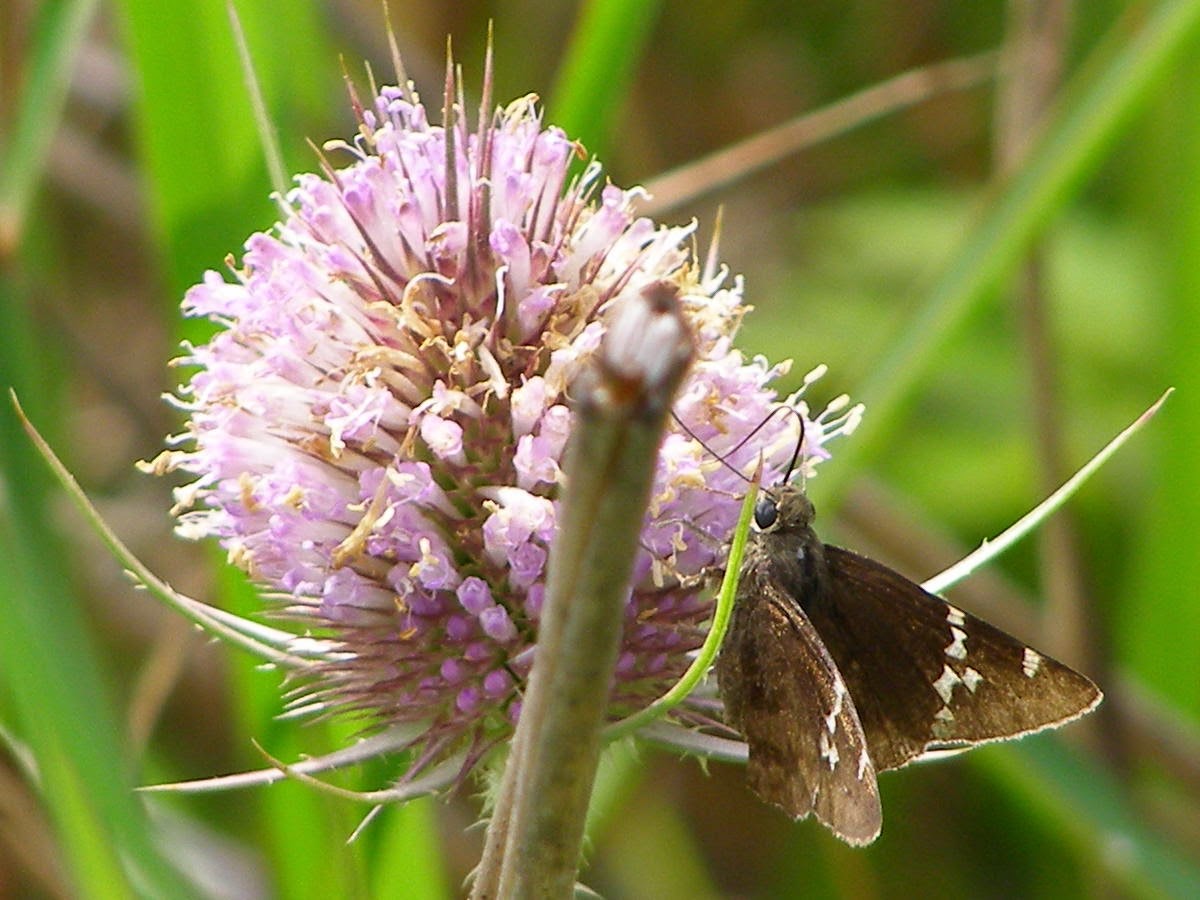
Even though they are invasive, the Teasel flowers attract a
wide variety of butterflies and other pollinators.
This
Southern Cloudywing
was looking quite bright and crisp.
I
would guess that it just recently emerged.
I try not to let too many things get me off task, but I
can’t walk by without cutting any little cedars I find growing in the field.
Walking the fields for invasive control also gives me an
opportunity to notice any changes in species composition.
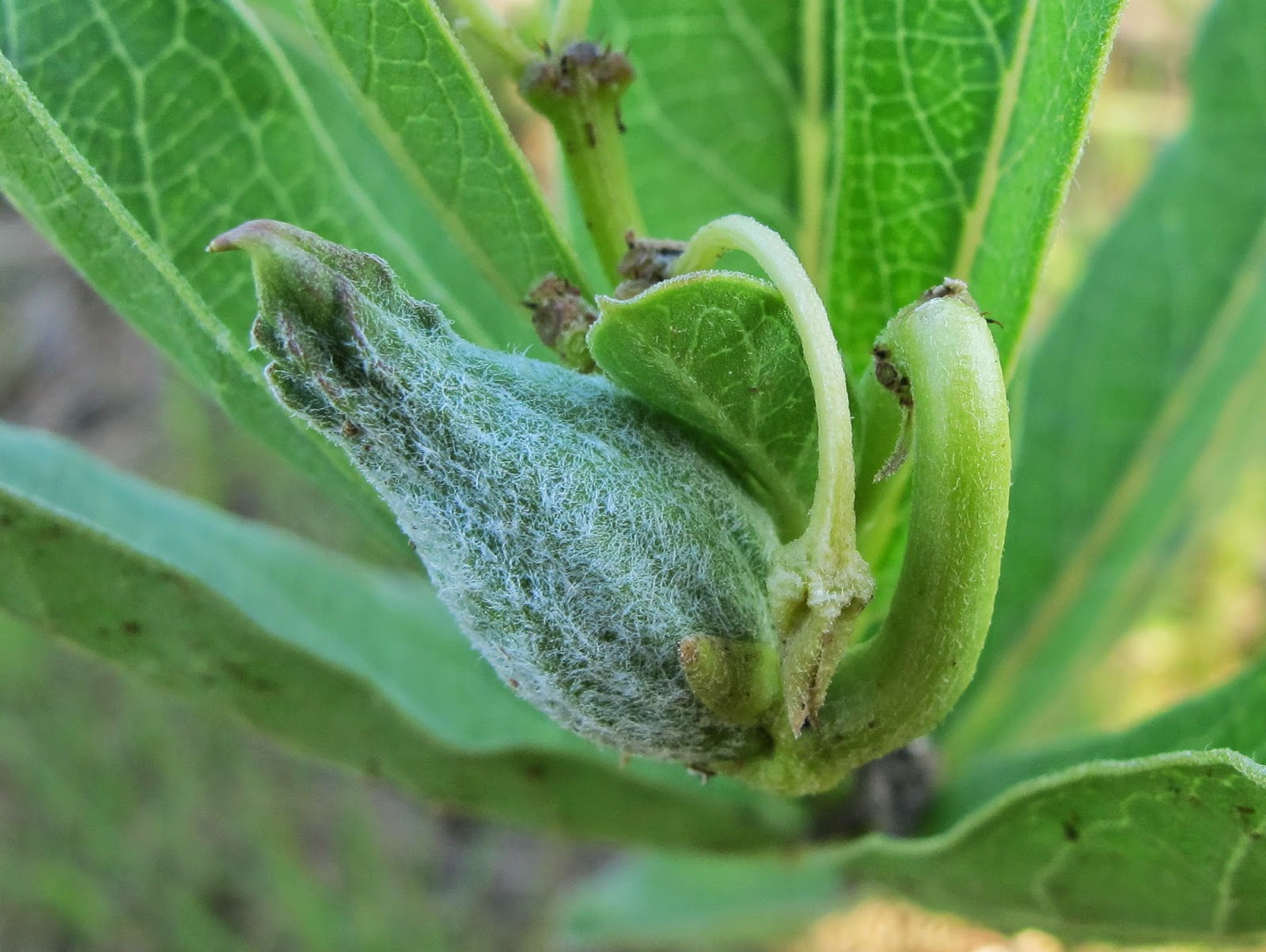
I found several new Spider Milkweeds,
Asclepias viridis, that had migrated into the field.
This is a plant that I have noticed being
used as an early season host by caterpillars of the State Endangered Unexpected
Tiger Moth, Cycnia inopinatus.
Second brood Unexpected Tiger Moths are found on Butterfly
Weed.
Butterfly Weed is common in this
field and I saw several of the bright orange caterpillars.
I only stopped for a few pictures, because I
kept telling myself to get back to work.