Some of the earliest of the spring flowers belong to native
trees and shrubs that produce their blooms prior to unfurling any leaves. Many of these go unnoticed because of their
inaccessible locations high overhead or because of the modest displays they
produce. One bright member of the early
flowering tree crowd is the Slippery Elm, Ulmus rubra.

They may not reach out and grab a casual passer-by, but the
Slippery Elm blossoms are certainly noticeable to those paying attention to
their surroundings. This particular elm
is common at Blue Jay Barrens, but it always seems that blooming individuals
are in the minority.

When I first catch sight of the swelling flower buds, I
always think galls. Then as I get
closer, I recognize the tree and the growth on the branch. The hairy bud scales are almost more
attractive than the flower.

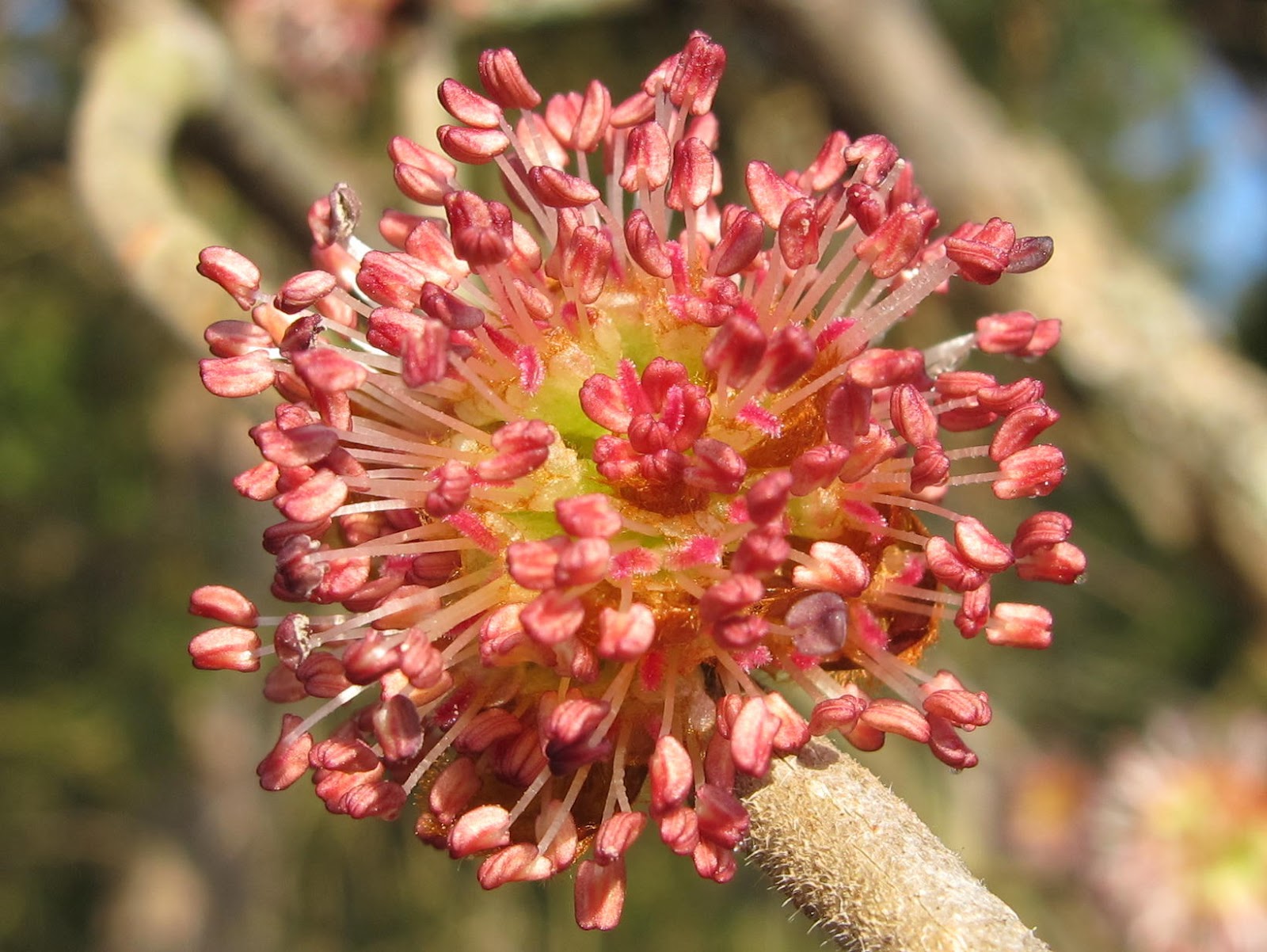
Most of the flower’s color comes from the dark red anthers
and pink stigmas. As the filaments
elongate, their pale color turns the flower cluster into a pink puffball. This is a short lived flower, so the window
of opportunity for optimum viewing is just a couple of days. The flower is quickly pollinated and seeds
will be ripe at about the same time the leaves begin to develop.

The flowers are situated lower down on the stem than the
leaf buds that will develop the new branches.
This arrangement is part of the reason I keep thinking the flower buds
are galls.

The bark is described as having shallow fissures. I pay attention to bark patterns, but I think
the descriptions are for mature specimens.
I find that a lot of young bark fails to match its elder’s physical
features.

Most of the elms contain a fair number of dead limbs. Fortunately, the trees persist and manage to
add live wood faster than it’s lost.

It’s not until the tree reaches above its neighbors that the
vase shape of the top growth becomes noticeable. It looks like there are plenty of flowers in
the upper branches, so this ought to be a good year for seeds.