Showing posts with label Birds. Show all posts

Thursday, November 26, 2020

Interesting Items Found While Working on Fall Projects

When actively engaged in management tasks, I’m unlikely to stop to take photos.  Completing the activity of the day is usually considered a higher priority than documenting what I do or see.  However, at times when there are natural breaks in the work, I’m quite likely to pull my little Canon G11 from its belt holster and capture some of the interesting items that catch my eye.  Most of the photos illustrate changes that have occurred as a result of my land management activities over the last few decades.  The Little Ladies-tresses, Spiranthes ovalis, is a good example.  This uncommon orchid was represented at Blue Jay Barrens by only a few individuals 30 years ago.  It is now seen commonly across dozens of acres each fall.
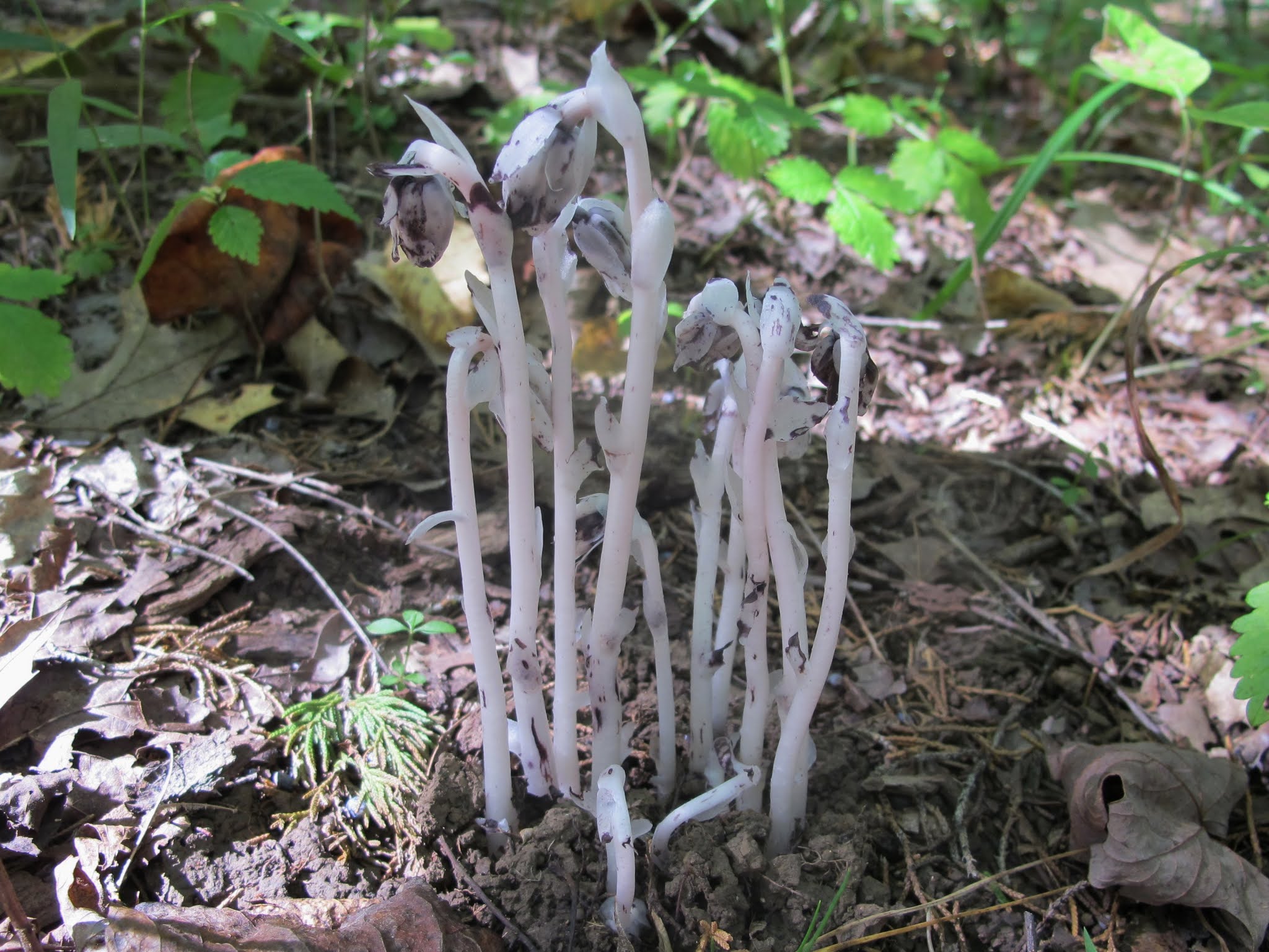

One of my favorite plants, Indian Pipe, Monotropa uniflora, was in abundance this year.  These plants are parasites on fungi and have no chlorophyll.  The new stalks are bright white and almost appear self-illuminated against the background of forest floor leaves.


Carolina Buckthorn was once listed as a potentially threatened species in Ohio.  Being a species of the South-eastern United States, its range just reaches into the southern counties of Ohio.  In 1990 Blue Jay Barrens supported just two small populations of this species, with one of those populations consisting of a single individual.  With the removal of non-native invasive shrubs, Carolina Buckthorn seedlings had a chance to become established and flourish.  Mature fruit bearing individuals are now common and seedlings are coming up everywhere.


Flowering Dogwood was eliminated from the Blue Jay Barrens woodlands when Dogwood Anthracnose decimated the population in the early 1990’s.  A few small specimens survived in the open fields and have been producing fruit and seed for many years now.  Mature dogwoods are finally beginning to recolonize the woodland.  The red and orange of their autumn leaves is hard to miss.


I’m unsure of the seed source, but young American Beech are becoming more common in the woods.  I’m happy to see this occurring since one of the historic hardwood mixes in this area was the Beech-Maple forest.  There is no shortage of Sugar Maple here and it would be nice to see a few mature Beech mixed in.


Partridge Berry is another species that has expanded its number greatly in the past few decades.  Historic grazing of cattle in the woodlands is one probable cause of this plant’s early rarity.  The absence of cattle during the past 35 years has resulted in much improved woodland soil conditions.


Fungi of many species were apparent this year.  One of the most noticeable was this Orange Fungus,   Mycena leaiana.  The orange fruiting bodies emerging from fallen logs rivaled the fluorescent blaze of the brightest hunting jacket.


Above average rainfall coupled with a forest of dead ash trees results in an abundance of fungi.  I believe this to be a polypore known as Dryad’s Saddle.


I must have appeared as though I was ready to collapse, because a large mixed flock of Turkey and Black Vultures moved in and began circling directly above me.  It was early morning, so the most likely explanation for the gathering was the development of a thermal current allowing the birds to ride the rising warm air to higher altitudes.  These thermals are common in areas where the rising sun warms bare southeast facing hillsides.  I’ve been known to generate a lot of body heat while working, but I doubt that it’s enough to change the atmospheric conditions above me.


Except for the early spring breeding congregations, Wood Frogs are seldom seen.  I’ve seen several during the past couple of months, possibly due to the uncommonly frequent rains during that time.


Spring Peepers have also been conspicuous this fall.  It’s not uncommon to hear a peeper or two calling on the first few cool days of autumn.  This year has been no exception.


The Giant Cranefly, Tipula abdominalis, is an impressive insect.  The larvae of this species live in upland streams where they feed on decomposing leaves.  Adults are typically found in woodlands, not far from the streams in which they once lived.


Jumping Bristletails are often referred to as prehistoric insects because they have remained relatively unchanged since their emergence approximately 390 million years ago.  My early elementary school days were filled with plans to become a paleontologist, so anything that may have walked with the dinosaurs still draws my attention.


Wooly Bears are the larva form of the Isabella Tiger Moth.  In my lifetime I’ve seen thousands of these caterpillars on the ground, in a hurry to get from one place to another.  This photo documents the first time I have ever seen a member of this species feeding.  In this case the caterpillar is feeding on the upper leaves of a Tall Boneset plant.


This is a female Carolina Leafroller Cricket.  These insects are generally considered common, but seldom seen creatures.  Part of the reason is their nocturnal habit, meaning that their active period is at night.  The rest of the reason is their method of hiding during the day.  As suggested by the name, the Carolina Leafroller Cricket spends its day rolled up in a leaf, making it extremely hard to find.  This individual seems to have been slowed down by an unusually cold night, and is warming itself in the first of the morning sunlight.


The tiny Pygmy Grasshopper is liable to show up anywhere at Blue Jay Barrens.  An adult specimen may grow to be as much as half an inch in length.  I don’t know that I would ever be successful at finding one by searching, but chance provides many encounters each year.


I regularly see Northern Fence Lizards, but I don’t always get out the camera during such encounters.  This time I noticed a fly on the leaf in front of the lizard’s head.  Thinking I had a chance of capturing an image of the lizard at the moment it captured the fly, I got my camera ready.  Unfortunately, things didn’t work out as imagined.


The fly flew and the lizard gave me what seems very much like an accusing look.


Eastern Box Turtles are opportunistic breeders.  They have no pheromones or calls to bring a couple together.  Breeding occurs when two individuals sharing a like mood happen to meet.  Females are capable of storing sperm for many months and using it when needed, so a positive encounter can take place long before the egg laying season.  I’ve seen an increasing number hatchling Box Turtles during the past few years, suggesting that the population is doing well.


Tuesday, May 19, 2020

Hermit Thrush

I am trying to compile a photographic record of all plants and animals found at Blue Jay Barrens.  At the moment, I am capturing images only as opportunity allows.  Beginning next year, this photography project will share the top priority slot in my list of management activities alongside invasive species control.  While taking a break from my woodland management activities, this Hermit Thrush took up an easy to view position not far in front of me.

I usually have an awful time photographing birds anywhere else than at my feeder.  In this case, despite an abundance of sight obstructing tree trunks, thickly branched shrubs and fallen limbs, the thrush continually chose resting sites that afforded me an unobstructed view.

The Hermit Thrush is a rare nester in Ohio.  This one was probably on its way north.

I was lucky enough to view this bird capturing and consuming an earthworm.


In addition to still photos, I am attempting to get a short bit of video of each species.  So far I’ve captured a lot of video of unmoving animals that occasionally blink or swallow.  The Hermit Thrush was kind enough to capture a worm just as I got it in my view finder.  The video above has not been edited to remove the shaky portions, because that would have removed most of the video.  If camera motion bothers you, do not watch this video.

Thursday, April 23, 2020

Bald Eagle

Yesterday morning, I put a dead raccoon near the edge of my lawn to feed the vultures.  Within an hour there were seven Turkey Vultures taking turns at the feast.  A half hour later I saw all of the vultures in the air and wondered why they had abandoned their meal.  A quick check showed the raccoon now in the possession of a young Bald Eagle.

I routinely move road-killed animals from the road in front of the house to the field behind the house.  I think it’s a lot safer for the scavengers and it provides me some interesting viewing.  I’ve seen Turkey Vultures, Black Vultures, Red-shouldered Hawks and Red-tailed Hawks feed on the dead animals, but this is the first visit I’ve had from a Bald Eagle.  This individual was keeping a close watch on the circling Turkey Vultures.

The eagle had no trouble taking what it wanted from the carcass.

The amount of white mottling makes me think this is a two year old bird.  However, my eagle experience is minimal, so I’m basing that assumption on what I’ve read in various bird field guides.

In between feedings, the eagle spent time sitting in a large fence row Black Walnut.  I saw it visit the carcass three different times.  It stayed in the area for about six hours before moving on.

Above is a short video of the Bald Eagle feeding.

Monday, September 30, 2019

Pileated Woodpecker

Sometimes you don’t even have to search for an interesting photographic subject.  I was lounging beneath a large cedar tree, waiting out a light drizzle of rain, when I heard some activity in the vegetation almost directly in front of me.  About the time I got my camera set up, a Pileated Woodpecker stuck its head up and took a look at me.

This is the largest of our Ohio woodpeckers and is always a treat to encounter.  I thought my presence was going to drive it away.  I just kept still and waited.  Humans are much less threatening when their facial features are hidden behind a camera.

My presence apparently didn’t cause the bird any alarm, because it continued tearing into a rotten stump in search of insects.


I’ve been trying to shoot some video of my photo subjects when possible.  The video shows the woodpecker breaking into a nest of ants. It’s particularly interested in grabbing the white colored larvae.  It snaps up what is readily available and then uses its tongue to probe into crevices to haul out any hidden morsels.  I stopped filming when the bird shifted around to the back of the stump.  It stayed out of sight for a few minutes before flying off.

Wednesday, September 13, 2017

Immature Cooper's Hawk

An immature Cooper’s Hawk has been hanging around beside the house for the past week.  Its usual perch is atop the stump of a limb rising from the body of a downed Silver Maple.  This puts the hawk in plain sight about 5 feet above the ground and 15 feet from my bird feeder.

Intermittent showers from the remnants of hurricane Irma have kept the young hawk looking rather bedraggled the last two days.

The hawk is vigilant about checking out any animal movement nearby.  A pair of Cooper’s Hawks has been hunting around the bird feeder for years.  It’s possible that this bird first visited here with its parents.

This may seem like the best place to sit and wait for a meal to come by, but it doesn’t work at all.

The above is a short video highlighting some of the hawk’s behavior.  Mostly looking and preening, with a nice tail fan in the last half.  The video was filmed from inside the house, so there are no interesting nature sounds to be heard.

Monday, August 7, 2017

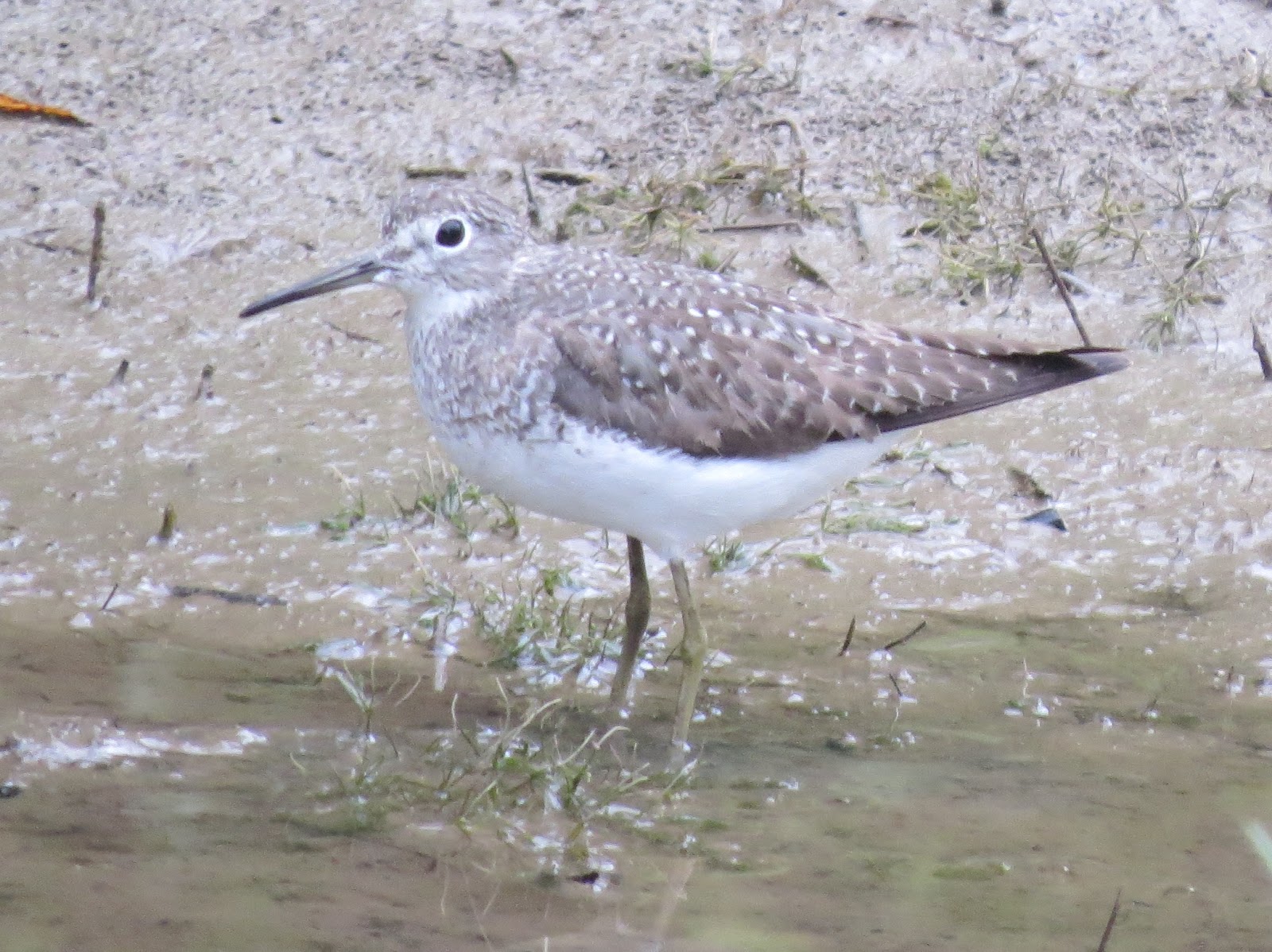
Solitary Sandpiper

Blue Jay Barrens is an excellent example of a xeric environment, meaning that the shallow, well drained soils cause the ground to be exceedingly dry.  It’s always a treat to see a visiting shorebird, since no shores occur here in a typical summer.  Solitary Sandpipers occasionally stop here, but this is the first time I’ve ever been in position to photograph one of these birds.

The flood of July 6 is responsible for a trace of the pond to still be present in early August.  It’s not much more than a large puddle, but it is the type of place a Solitary Sandpiper will go to forage for food. 

The bird seemed to be finding plenty to eat in the shallow water.  Most of what it caught was tiny, but a couple items were large enough that I could discern a dark form disappearing into the bird’s mouth.

Above is one of the videos I shot.  I spent about 20 minutes watching this bird.  Not once during that time did it give any indication that it was concerned with my presence.  About ten seconds into the video, the bird turns a quick 180 in response to a Mourning Dove winging just a few feet over its head. 

Wednesday, March 29, 2017

Nesting Woodcock

I was doing some work around my barn this afternoon and scared up this American Woodcock from a small clump of grass and Japanese Honeysuckle vines.

The Woodcock only flew a distance of about 8 feet and then came down in the grass. It froze in place, and I did the same. It had jumped into the air what seem like mere inches from my feet. That, along with the fact that it seemed reluctant to leave the area, suggested that there was a Woodcock nest very close to where I was standing.

I didn’t dare to move my feet for fear of stepping on a nest. While pulling my camera from its belt pouch, I carefully scanned the ground in front of me. The nest was just 18 inches away. Not wishing to disturb the Woodcock anymore than I already had, I took a couple quick pictures of nest and bird, and then slowly backed away. I returned about an hour later and got close enough to see that the female had returned to her nest.

I don’t know if this is the full clutch or if the Woodcock will still add another egg or two. A clutch of four eggs is typical for the species. I’ll have plenty of opportunity to keep an eye on this nest. It’s located only 12 feet from my barn door and only 4 feet from the path I travel every day around the backside of the barn. For the next few weeks, I’ll limit my activities in that area, so the bird can tend to the job of incubating her eggs in relative peace.

Wednesday, January 11, 2017

2017 Blue Jay Status

January weather typically includes a bout of cold temperatures and snow cover. These conditions bring an increase in activity at the Blue Jay Barrens birdfeeders and give me an opportunity to assess the local Blue Jay population.

Blue Jay numbers are running at about their normal level this year. Except for one or two birds that have a distinctive marking or unique behavioral trait, I can’t tell the individual birds apart, so I don’t know for certain how many are year-round residents of Blue Jay Barrens and how many have just moved in for the winter. The general behavior of the flock makes me think that the majority of individuals are here all 12 months of the year. In particular, I don’t believe that a new arrival would automatically know to sit in the apple tree and yell when the feeder goes empty.

As always, the almost constant movement between the feeding area and the nearby trees makes it nearly impossible to get an accurate count. I spotted 29 Blue Jays in the previous photo, including the one in the air. I know there were at least 47 here at one time, but at that same time I could see several more moving in the trees at the edge of the field a few hundred feet away.

The feeder on the post contains black oil sunflower seed. The area at the base of the tree in the upper right-hand corner of the photo gets a few cups of cracked corn scattered out each morning.

Second to the Blue Jays in producing consistently high numbers in the feeder area are the Cardinals. In between trips to the feeder, the Cardinals tend to hang out in the dry stalks of Giant Ragweed and Wingstem adjacent to the feeder.  The smaller feeder visitors also seem to prefer this area for feeding and loafing. The large crop of seeds produced by these plants has now been nearly consumed.

The tall plant stalks have been battered by rain, wind, and snow, but they continue to remain upright.

It’s not uncommon to count 30 or 40 Cardinals in the feeder area at one time. Most take their seed from the ground instead of directly from the feeder.

Mourning Doves typically arrive a couple hours after sunrise. There are usually 25 or 30 individuals in this flock.

Most of the doves in the area spend the winter gleaning seed from nearby harvested crop fields. A deep snow can make that source of food inaccessible, and the result is a substantial increase in Mourning Doves at the feeder.

These two Blue Jays demonstrate how so much sunflower seed gets on the ground beneath the feeder. They scrape seed up and over the edge of the feeder tray until they find just the seed they want. This also explains why my feeder sometimes so rapidly runs out of feed. I thought for a while that they were searching for the few shelled seeds that could be found in the mix, but that didn’t turn out to be the case. When they start to load up with seed, it’s just the standard seed in a shell. Maybe they just want to be sure that their friends down below have plenty to eat.