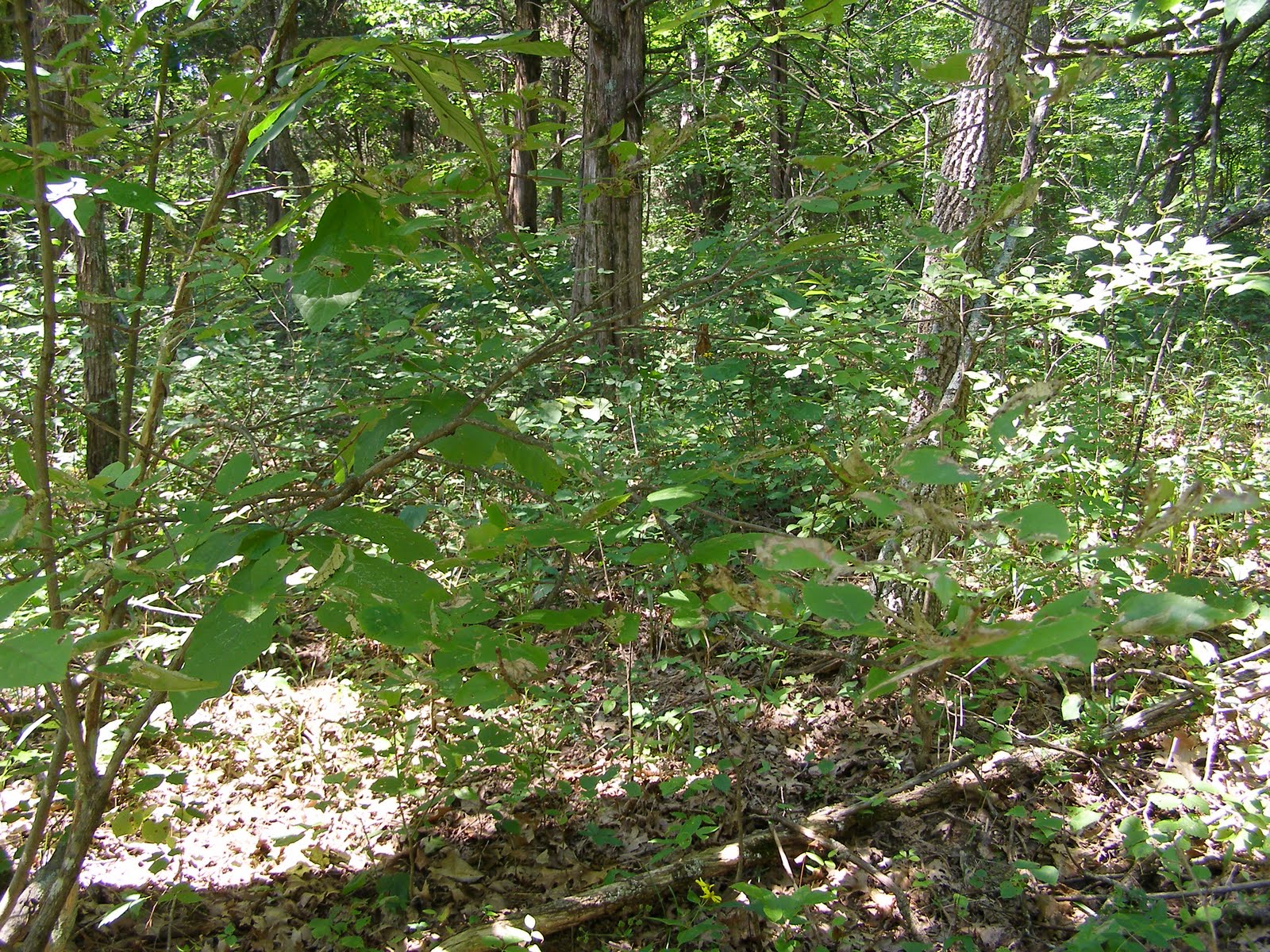
While I was in the woods, I spent some time visiting the ash trees. This is a White Ash,
Fraxinus americana. Emerald Ash Borer beetles have been confirmed in Pike County, so it’s only a matter of time before they get here. I’d like to think they will miss my little piece of the world, but that’s not likely to happen. While I can, I’ll just enjoy having these big healthy trees growing here.

White Ash are strong, tall trees that claim their own portion of the upper canopy. There’ll be quite a hole left when this tree comes down. This tree outweighs most of its neighbors and will probably take a couple of those down when it falls.

The White Ash is a tree of the upland woods and has opposite branching compound leaves. You’re not likely to get a close look at the leaves of most big woodland ash trees. Occasionally you’ll find a stump sprout or side shoot that gives you an idea of what’s in the canopy.

This particular tree displays the fuzzy stems and leaves characteristic of a variation sometimes referred to as Biltmore Ash.

The other large upland ash at Blue Jay Barrens is the Blue Ash,
Fraxinus quadrangulata. The bark of the Blue Ash forms scaly plates instead of the deep furrows and high ridges of the White Ash.

Blue Ash has the typical ash type leaves, but the new twigs are square in cross section and often exhibit a slight wing along the corners.

Both of these species of ash are integral components of the upland forest species mix. There are still a lot of young ash trees in the woodland understory. After the Emerald Ash Borers kill the mature trees, these young ones will try to exploit the suddenly available space. It’ll be decades before we know if the ash has been lost from the woodland forever. I only know that if these trees are lost, I’ll never see their like here again.

Ten years from now, this may be how we view the once mighty upland ash. I can picture myself sitting on a fallen ash log, wondering how the woodland will adjust to this latest change to its ecosystem.
 There are always some new dead trees in the woods. Sometimes it’s a wonder that the woods can persist given the annual numbers of newly dead trees. I found a clump of dead and dying ash trees along one ridge top. The cause of the tree deaths usually remains a mystery. That’s partially due to the multiple factors that constantly put stress on the trees. Insects, disease, shallow soil, weather, air quality, impurities in rain water, lightning strikes and various other factors combine to weaken the health of a tree, making it very difficult to assign one factor as the cause of death.
 These days, when any ash tree dies, people automatically assume that the Emerald Ash Borer got it. I gave this Blue Ash a careful going over and could find no evidence of any borer damage. That crooked trunk suggests that this tree has seen some stressful moments during its life.
 The exposed wood seems free of borer damage. Emerald Ash Borer would have left distinctive tracks from the larvae that feed just below the bark.
 The inner side of the bark is also clean. It’s nice to know that the trees aren’t being killed by an exotic borer, but it’s little consolation to avoid borer infestation by having the ash trees die before they can become infested.
 Some of the trees are showing dead tops, but have new branches emerging lower down on the trunk. When trees react in this fashion, they are not likely to recover. There is often a temporary period of increased vigor which is followed by a dramatic decline. This sequence may occur several times, but the final outcome is death of the tree.
 The dying trees are located around the perimeter of a small opening in the tree canopy. It’s possible that these trees are suffering from a cloud-to-ground lightning strike to this clearing. From the house, I’ve watched so many lightning strikes to this ridge that it’s a wonder there are any trees left. Many of the trees bear the scars of their lightning encounters. It’s not hard to believe that a well placed bolt of lightning could mean the end of a few of these trees.