Showing posts with label Flowers. Show all posts

Monday, March 6, 2017

Blooming Leavenworthia uniflora

Leavenworthia uniflora is also setting a new early bloom record this year.  First bloom appeared on March 3, about ten days earlier than the previous record.

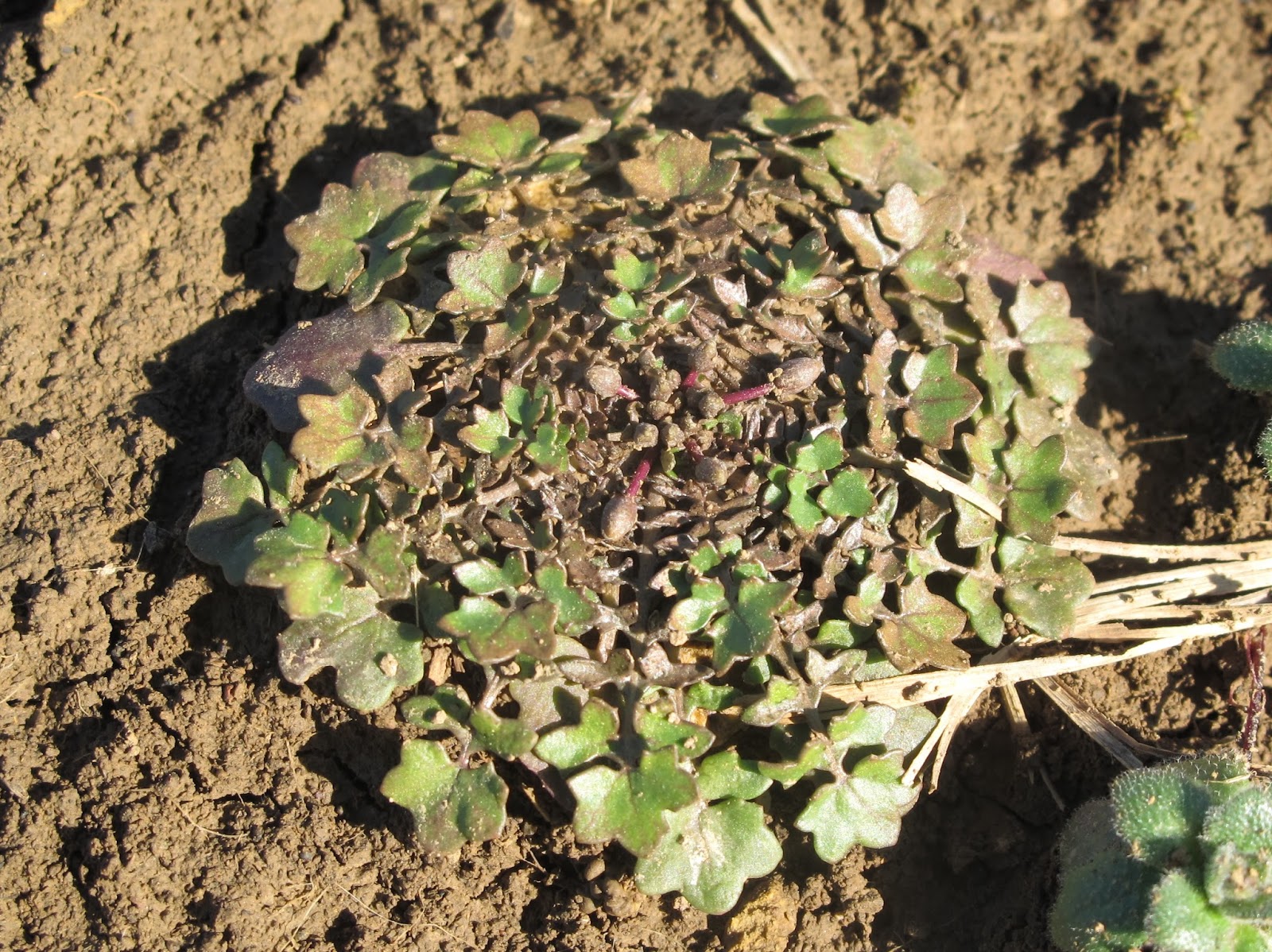
Leavenworthia has a basal cluster of leaves that develop horizontally outward from a central point. The collection of leaves generally does a pretty good job of shading out competitive vegetation, at least near the center of the whorl.

The plants all have a fine collection of developing flower buds. Each flower will be held aloft individually atop a thin, branchless stalk.

This individual grew to resemble a tightly woven beverage coaster. Despite its slightly unusual growth pattern, there are still plenty of buds developing.

None of the other Leavenworthia plants have yet reached this stage of development. I expect it will be a couple of weeks before the next plant in line begins to display blooms. By the end of March though, I expect all the plants will be flowering profusely.

Friday, March 3, 2017

Blooming Draba cuneifolia

The Blue Jay Barrens Draba cuneifolia have set a new record for early blooming.  First full blooms appeared on February 26, more than two weeks ahead of the prior record.

In some places the Draba almost completely carpet the ground.  Not a bad showing for a plant considered to be Threatened in Ohio.  Lack of snow cover and above average temperatures allowed these plants to put on some impressive growth over the winter.  A couple of really cold nights resulted in a discoloration in some of the leaves, but that hasn’t slowed them down any.

This looks like an aerial shot of a forest landscape, but the photo was taken with the bottom of the camera sitting on the ground.  All of the plants are Draba cuneifolia.  With nothing in the shot for scale, it’s hard to realize that the largest plant in the bunch stands less than an inch tall.

Only a few plants currently have open flowers, but there will soon be more.  The majority of the plants have at least one bud opened far enough to show the white petals inside.

There are also plants that are at a stage typical for this time of year.  These buds will most likely open around the middle of March, a more normal time to expect the first flowers to appear.  A little frost or snow won’t slow these plants down now.  I’m expecting an impressive seed crop this year.

Monday, May 18, 2015

Blooming Season Potato Dandelions - Three Days Later

It seemed likely to me that the Potato Dandelion flower buds seen a few days ago would be open today, so I made a trip into the woods to check.  I was suitably impressed by what I found.  All but one of the buds had opened.  On my previous visit to this site, the plant in the foreground of the above photo had three stalks topped by buds.  This morning there were two stalks with flowers.  The third stalk had disappeared completely.  I’m hoping the predator that removed that stalk has had its fill of Potato Dandelions.

The yellow bloom atop the tall stalk made it easy to find the plants.  I even found another cluster of plants that I hadn’t noticed before.

The ground wasn’t quite as bare around the new found cluster.  The leaf litter was only about one leaf thick though, so the plants had no trouble thrusting their leaves into the light.

I went down to the other end of the ridge to check on the original Potato Dandelion site.  This section of woods suffered a lot of damage from grazing cattle, and things are struggling to recover from that negative impact.  The cattle have been gone for over 30 years, but the Whitetail Deer are doing their best to take up where the cattle left off.  The deer have left a well developed browse line through the entire woods and are changing the composition of the forest understory with their overbrowsing of preferred food plants.

I was pleased to find blooming Potato Dandelions at the original site.  Four out of five years will find zero plants blooming here.  I noticed that the long term snow pack that existed in the woods this past winter had significantly compressed the leaf litter.  This may have made it easier for the plants to get their leaves out into the sunlight.

Whatever the reason, I counted 11 flowers at the time of my visit.  The only time this site has come near this number of blooming plants is when I’ve physically removed the leaf litter prior to the emergence of the plants.  It will be interesting to see if any of these flowers produce viable seeds.

This is how the plants look during a normal year.  Plenty of elongated leaves fall limply across the leaf litter like they were subjects in a Salvador Dali painting.

It looks like the flower count is destined to increase.  I found many plants that were just beginning to send up flower stalks.  When you are used to most years passing without a single Potato Dandelion flower, a year with an extended blooming season could prove to be quite overwhelming.

Friday, May 9, 2014

The Start of Prairie Flower Season

At first glance, the mid-spring prairie appears to be clinging tenaciously to winter.  The dead stalks of Indian Grass, Big and Little Bluestem and Side Oats Gramma hide from view the first of the season’s prairie bloomers.  The plants that will bring color to the field in summer are just beginning to grow, but hidden down in all of that brownery, early flowering species are hard at work.


I consider the blooming of the Hoary Puccoon to be the beginning of prairie flower season.  Hoary Puccoon is the first showy species to flower and at its peak will shower the prairie with orange.


Young plants begin as a single stalk.  Once they become established, they will form a multi-stemmed clump.


One of the earliest bloomers is almost lost from view.  Juniper Sedge, Carex juniperorum, is a low growing, grass-like plant that looks as if it’s been ground beneath someone’s boot heel.  The thin leaves radiate out from a central core in an almost horizontal manner.  It’s nothing to get excited about unless you know the story of its rarity and how it managed to remain unnoticed by professional botanists for decades before being recognized as a new species just 25 years ago.


Its flower has past its prime, but with something as nondescript as this, it’s hard to tell.


I’m certain that I don’t have this particular species on the Blue Jay Barrens plant list.  The only reason I don’t add it now is the fact that I’m not certain of the identification.  I originally saw it late last year and thought it might be Senecio plattensis, but the plants were too far gone to be certain.  However, when I run this plant through the keys it quickly falls out as Senecio pauperculus, listed as a Threatened species in Ohio.  That would be the end of it if I didn’t know that the keys are just an aid in identification and not the last word.  When I go on to read the species description, things don’t seem to match.  Then, as seems to happen to me all too often, I read that these Senecio species can show much variety and have a tendency to intergrade. 


So, I’m going to have to study these plants a little more closely before making up my mind.  Until then, all I can say is that I have a field full of some lovely little Senecio plants.


Wood Strawberry is doing quite well this year.  The ripe berries are a favorite of the Eastern Box Turtles.


Fringed Houstonia, Hedyotis canadensis, is blooming in profusion, but with a height of only a few inches it is barely noticeable.


Pussytoes are poised to bloom.  They tower above the emerging prairie grasses.


White Blue-eyed Grass is scattered throughout the prairie.  Even though it is also a diminutive plant, it is generally easier to see than its companion spring bloomers.


Of course, plants aren’t the only things showing off their colors.


A newly emerged Luna Moth, fluids still being pumped into the expanding wings, brings an added dimension to the prairie.


Botanical forays to the prairie now include a serenade provided by the Prairie Warbler. 
 

Even though prairie is part of their name, it’s actually the scattered cedars that attract the Prairie Warblers.  Short cedars and pines are common nest sites for these birds.  By the time these warblers end their singing, the prairie will be brightening with the early summer prairie flowers.

Sunday, August 19, 2012

Uncommon White Flowers

All species show variations, but I think those differences are most noticed when they deal with color.  Every year I find a few plants with flowers displaying white petals instead of their normal hue.  These two diminutive Rose Pink plants were growing side-by-side; one with white petals and the other with standard pink petals.  This species produces a few white petaled individuals each year.

The dry prairies are filled with Hairy Small-leaved Tick Trefoils with their long stalks of lavender blossoms.  I shouldn’t have to point out the obvious face showing in each bloom.

One lone plant is producing stalks of white flowers.  From a distance, the white blossoms are much easier to see.

Sadly, the face is not nearly as evident in the white flowers. 

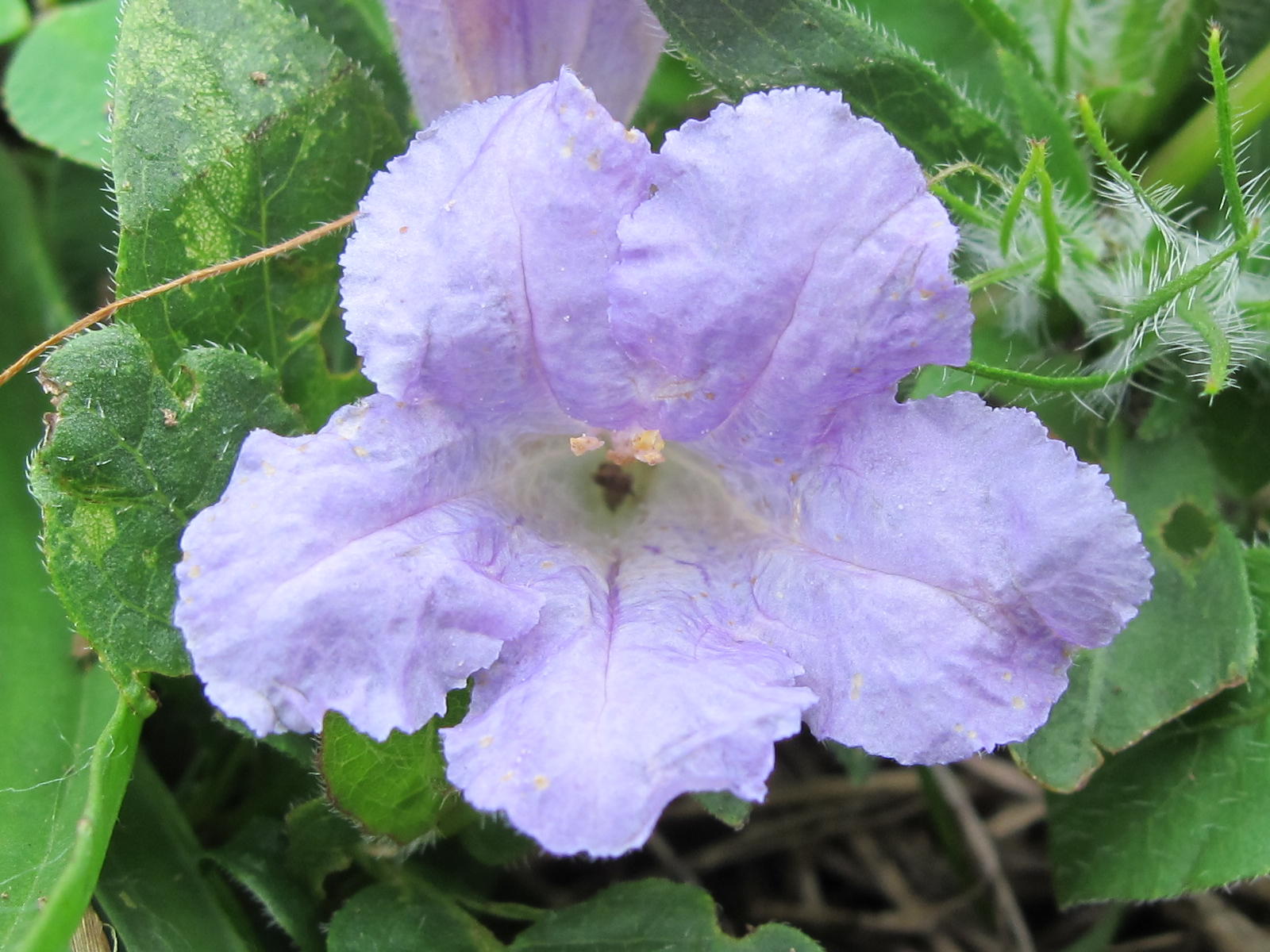
The Wild Petunia regularly displays petals in varying shades of blue and lavender, but the differences are not enough for the casual observer to notice.

When the Wild Petunia shows itself in white, the blossom stands out from the crowd.  As a manager of wild plant populations, I enjoy seeing these variations.  A wide range of genetic choices is an indicator of a healthy population and makes that population more resilient and able to survive environmental changes.  Flower color may mean little to the future survival of a species, but these visible signs of genetic diversity suggest that there is also much genetic variation present that is not so easily detected. 

Friday, August 17, 2012

Blooms on the Dry Prairie

Growth on the prairies is mimicking that of the Prairie Garden.  That’s encouraging, since that’s how I had hoped my artificial creation would act.  However, the actual growth is less than encouraging.  This area of short grass is typically dotted with bright color at this time in the season.  The color this year is almost entirely pale green.

Some plants are actually doing well despite the odd weather.  Little Ladies’ Tresses, Spiranthes tuberosa, is looking very well.  Its full height of about six inches is just not enough to make it very noticeable.

Petals of the Spiranthes flower never look quite real.  I always imagine them as being made of ice crystals or clear plastic.

Whorled Rosinweed blooms are a bright yellow that should be visible from a considerable distance.

Unfortunately, instead of their normal five foot height, the plants are averaging closer to 18 inches.  The plants are also producing just a single bloom instead of the usual half dozen.  The flowers are well hidden by the grass.

Flowering Spurge is similarly diminished this year.  The plants normally top out around three feet tall.  These are lucky to reach a foot.

Bluehearts have remained relatively unaffected.  Height is slightly reduced, but the flower spike is just as full as ever.  Their blooms are too small to be easily seen at a distance, so they don’t do much to brighten the landscape.

As with those in the Prairie Garden, the Round-podded St. Johnswort is producing a new set of blooms.  The recent rains must have really invigorated this species.

Rose Pink continues to bloom.  This species has been blooming for the last couple of months and shows no signs of slowing.  Some of the early bloomers are already drying down and releasing seed.

Partridge Pea is blooming at a normal rate.  This species has the potential to form tall plants with many flowers, but Blue Jay Barrens specimens are always small and only produce one or two flowers.  I may collect a few seeds from this annual plant and see how large the plants get when given good soil and plenty of water.

Hairy Small-leaved Tick Trefoil always does well and this year is no exception.  The flowers are not large enough to make a showy display, but there will be enough sticky seed pods this fall to cover a person’s pants legs as they walk through the field.

Another specimen of the same Trefoil species appears to have grown with its flower stalks fused.  There are always oddities of some sort showing up in the fields.  I would prefer to find oddities that turned out to be species I have not yet encountered.  It’s getting to be too late in the season for the prairies to suddenly burst with color.  Next year has got to bring a better display.