I’ve seen four Robin’s nests so far this spring.
Two in cedars, one in a white pine and this
one anchored to my house.
The Robins are
year-round residents and spend the winter months feeding on various fruits or
searching the creek edges for various arthropods and worms.
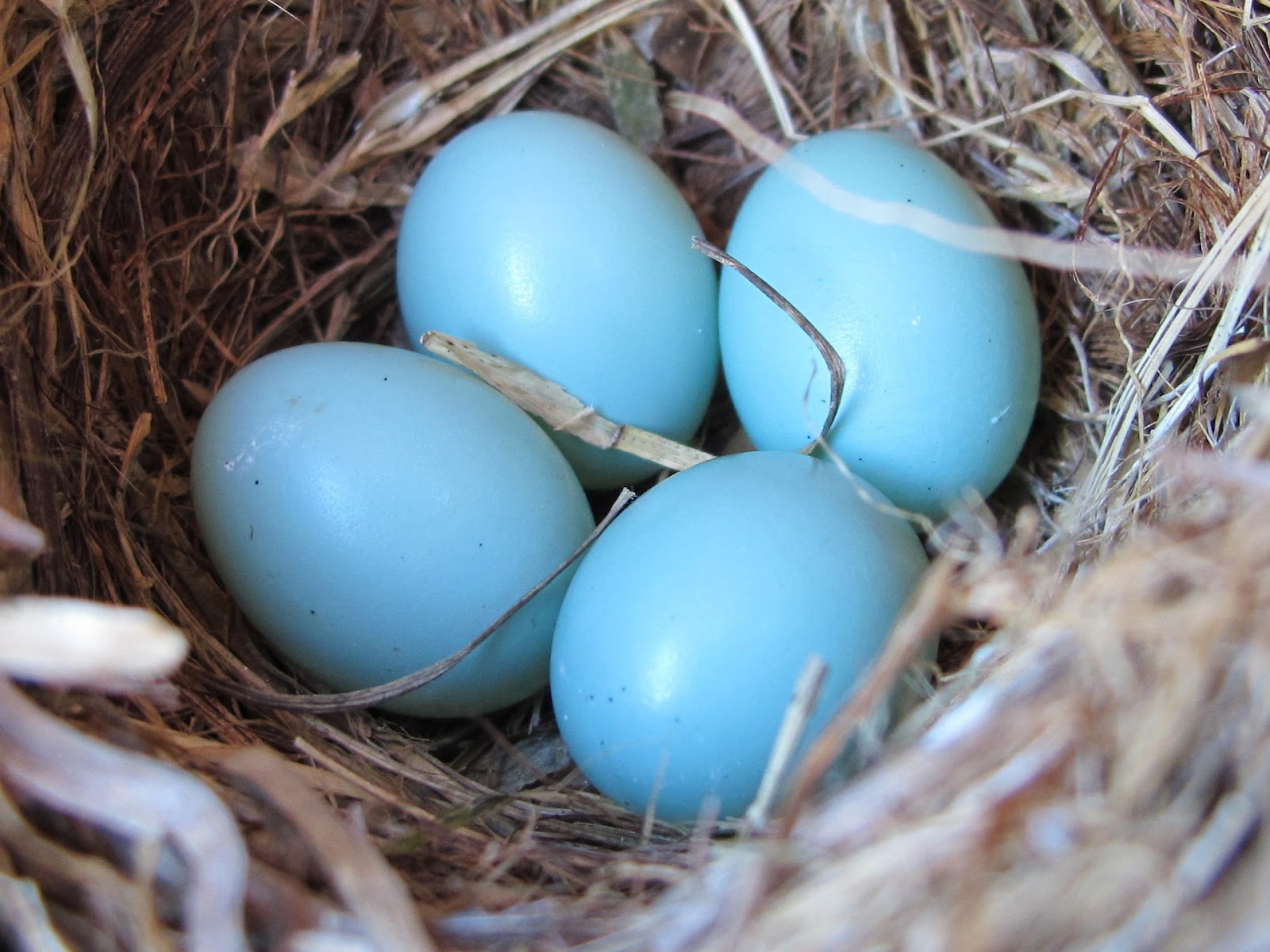
This female completed her clutch at the usual four
eggs.
She’s been sitting for a week now,
so the eggs should be half way to hatching.
Ledges are often used as nest sites.
Robins also readily utilize an open platform
type nest box.
Usually the nest is higher than just a couple of feet above
the ground.
I’m hoping this one doesn’t
attract any passing predators.
The Robin
nest is in close proximity to a Phoebe nest on a platform showing in the upper
left corner of the photo.
The Phoebe chicks are already well developed.
I installed this nest platform specifically
for the Phoebes in an attempt to keep them from nesting on the porch.
Porch nests almost always failed, usually
because some unexpected late night visitor spooked the birds from the nest and
the young succumbed to exposure overnight.
The Phoebes now raise at least one family each year on this platform.
The Wild Turkey nest I showed a couple of weeks ago has been
plundered by some predator with a taste for eggs.
I have been purposely staying away from the
nest so as not to leave a scent trail to be followed by hungry mammals.
A broken egg on the nearby walking trail was
evidence of what had happened and the disturbed nest was clearly visible from a
distance.
I’ve seen Opossums, Skunks and Crows do this type of damage
to eggs.
Those three species are all
common here.
This is why the turkey lays
so many eggs.
It only takes a small
percentage of successful nests to sustain the population.
The nest boxes are doing a brisk business.
Out of a dozen boxes, only one held a
Bluebird nest.
Since I see several
Bluebird pairs around the field, I assume some are nesting in natural cavities.
Tree Swallows occupy the majority of the boxes.
Twenty-five years ago, it was uncommon to see
a nesting pair of Tree Swallows.
Bluebirds dominated the boxes at that time.
Feathers are used to line the Tree Swallow nest.
Turkey feathers are becoming more
common, but the majority seem to come from domesticated ducks and chickens.
A single nest box was unoccupied and this is the reason
why.
Wasps will aggressively defend
their nest site from intruding birds or photographer’s heads.
The empty box did offer a platform from which the Meadowlark
could sing undisturbed.
This guy tried
to sing from occupied boxes, but was driven away by the resident nesting pair
every time.
I’m not sure if the birds
were defending their nest site against an intruder or just being critical of
the Meadowlark’s vocalizations.






 Memorial Day usually coincides with the end of the first nesting attempts in the bird boxes. That makes it an opportune time to make the rounds and see how things are going.
 Bluebirds are the first to nest in the boxes each year and are usually finished with their first brood by now. I try to clean the boxes before another pair of birds moves in and builds a new nest on top of the old.
 It’s always a dusty mess beneath the nest. There’s an art to avoiding the blowing dust created by sweeping out the box.
 Ants have moved in and have quite a cache of larvae and pupae stored in the old nest material. The presence of ants could cause potential nesters to avoid this nest box. The ants could also be trouble for any developing nestlings.
 I leave the box clean and ready for the next occupants. I didn’t find any active Bluebird nests. I see a lot of Bluebirds sitting on the utility wires or the fence, along with what appear to be their latest batch of young.
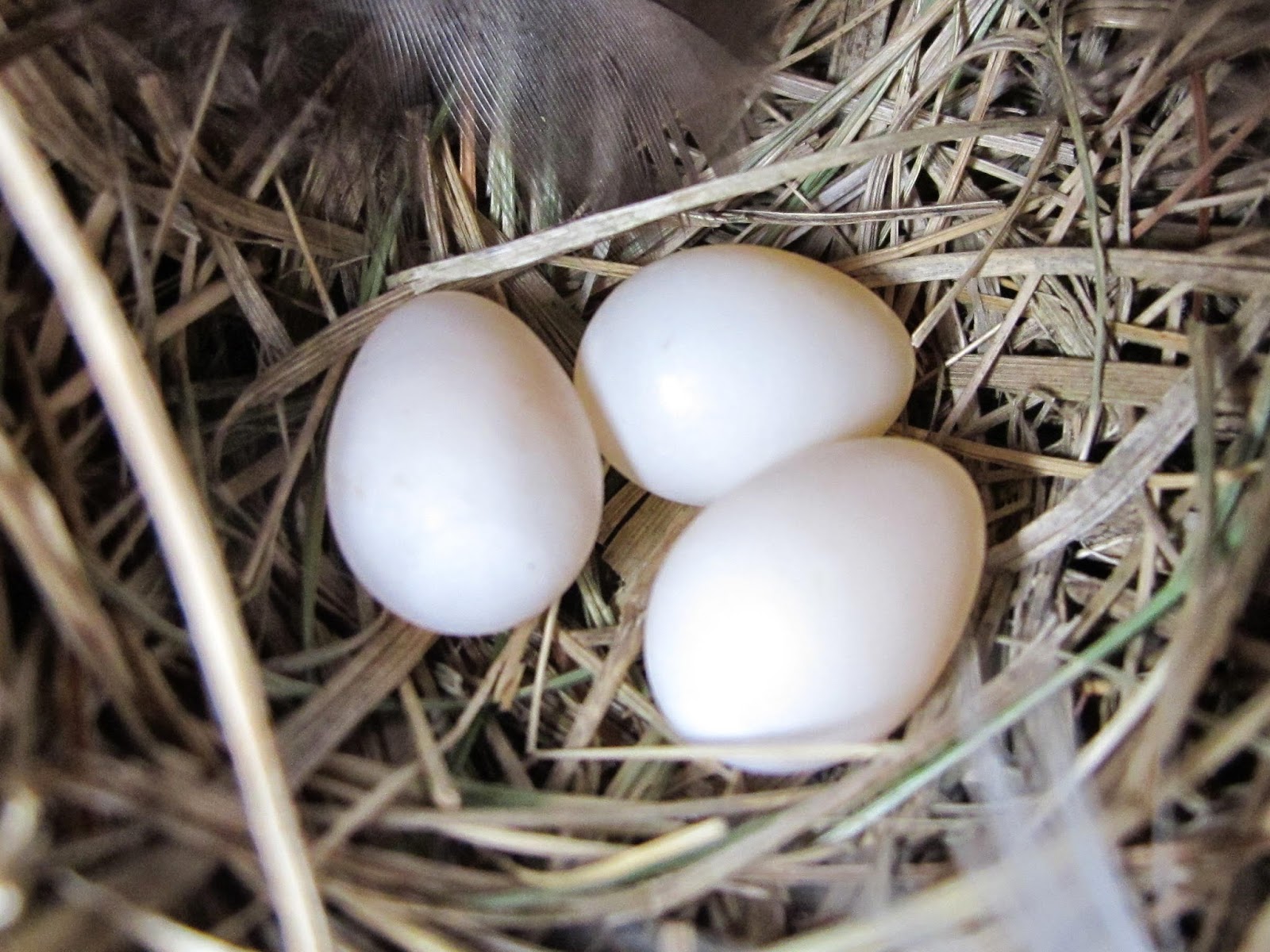
 All of the active nests were those of Tree Swallows. The range of activity stretched from a newly constructed nest to a batch of older youngsters. There were two nests with four eggs in each.
 There were also two nests with older nestlings. It looks like Blue Jay Barrens will once again make a significant contribution to the Tree Swallow population. Competition for nest space is already intense. Some of these birds are going to have to move off and find new territory.
 As is usual, I found myself between hungry birds and their parents. Insects are out in abundance, so I expect these little guys will be filled to capacity.