Last month I was describing the drought conditions currently
being experienced at Blue Jay Barrens. I believe it’s safe to say that that
particular period of drought has come to an end. On July 6, Blue Jay Barrens was
the recipient of 6+ inches of rain in a period of less than 12 hours. The resulting
flood conditions far surpassed anything we have ever experienced here in the
past.
The rain began around 1:30 AM and continued until 8:30 AM.
During that time approximately 3 ½ inches of rain fell. Our dry soils were able
to accommodate most of that water and very little runoff occurred. The weather
was clear for the next few hours, until a storm formed over the area around 12:20
PM. During the next hour, 2 ½ inches of rain was added atop soils which had
nearly reached their saturation point. Runoff began immediately and the
majority of that 2 ½ inches of water flowed overland across the landscape. The
video above shows the runoff from a watershed only a few acres in size as it
crosses the driveway in front of our house. The video begins during the most
intense part of the storm and ends about five minutes after the rain stopped.

Even though I was dismayed at the magnitude of the disaster
unfolding before me, I got some pleasure at viewing the scene shown in the
photo above. The clear water coming in from the left is flowing from my field
that has been managed for the past 30 years as tallgrass prairie. The muddy
water to the right comes from neighboring properties and the Township road.
When I first bought this property, all of that runoff water would’ve been
muddy. It’s nice to see that my management efforts are having some positive
effects.

The former access road, now grassed over, carries the excess
floodwater past the prairie display garden and dumps it over the bank into the
pond. Water from a more normal runoff event would all have gone through the
shrubbery to the right.
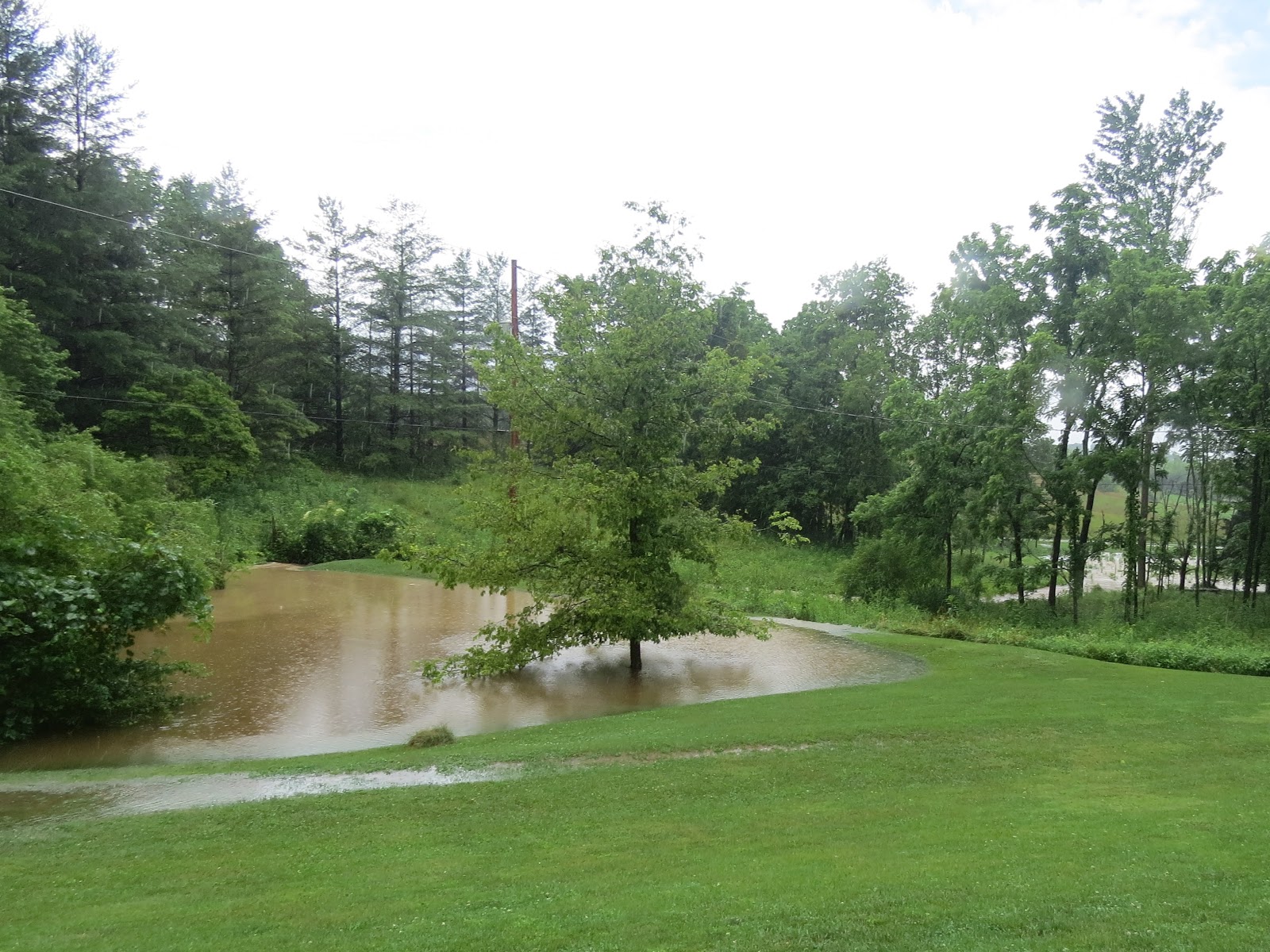
With the pond’s primary spillway overloaded, water overtops
the dam. This is something that has not occurred since I moved here.

During a year with more typical rainfall, the pond would currently
be down to just a puddle and raccoons would be devouring the last of the
tadpoles. Gray Treefrog tadpoles generally have a poor time of it in the pond.
They breed later than most of the other frogs and the tadpoles generally don’t
have time to fully develop before the water disappears. This flood event has
been a boon to the Gray Treefrog population.

Thanks to all this water, I’ll be seeing many more of these
newly morphed Gray Treefrogs during the next few weeks.