A Common Evening Primrose, Oenothera biennis, managed to
establish itself beside the barn. This
is a native biennial that prefers growing in areas of bare, disturbed
soil. I always let one or two grow to
maturity each year. The seven foot tall
plants produce an abundance of pretty flowers, but you have to be an early
riser to see them at their best.

Evening Primrose is a night bloomer. Flowers open in late evening and wither in
the early morning sunlight. Sphinx moths
are common night time visitors to this flower.
I’ve spent several nights out watching and have yet to see any insect
come near the flowers. I haven’t stayed
out all night, but there should be some nectar hunters out in the hour on
either side of midnight .

In years past, I’ve seen plenty of sphinx moths at these
flowers. This year’s flowers seem to be
incredibly lonely. I wonder if the
sphinx moths have gone the way of my missing butterflies.

Within a few hours after sunrise, the flowers have faded
away. The flower stalk keeps producing
more flower buds. There are always a few
new buds ready to open every night, so the actual blooming period lasts for
quite a while. Old flowers are busy developing
seeds. Something must be fertilizing the
flowers, because the seed pods just keep growing.

Ants have claimed this plant and have created a temporary
nest at the base of the stem.

These small ants are on constant patrol and can be found
everywhere on the plant.

Several Spittlebug nymphs are residing on the plant. Most make their foamy nest near the stem on
the upper side of the leaf.

Nymphs stay safely hidden within their bubble nests and feed
on sap from the primrose. Each foamy mass contained at least two nymphs. This is a dorsal view of two nymphs. The right hand nymph is oriented head down
and the left is head up.

The nymphs crawl free of their nest to perform the final
molt into adulthood. The adults are
capable of flight and take off to pursue a free roaming life style.
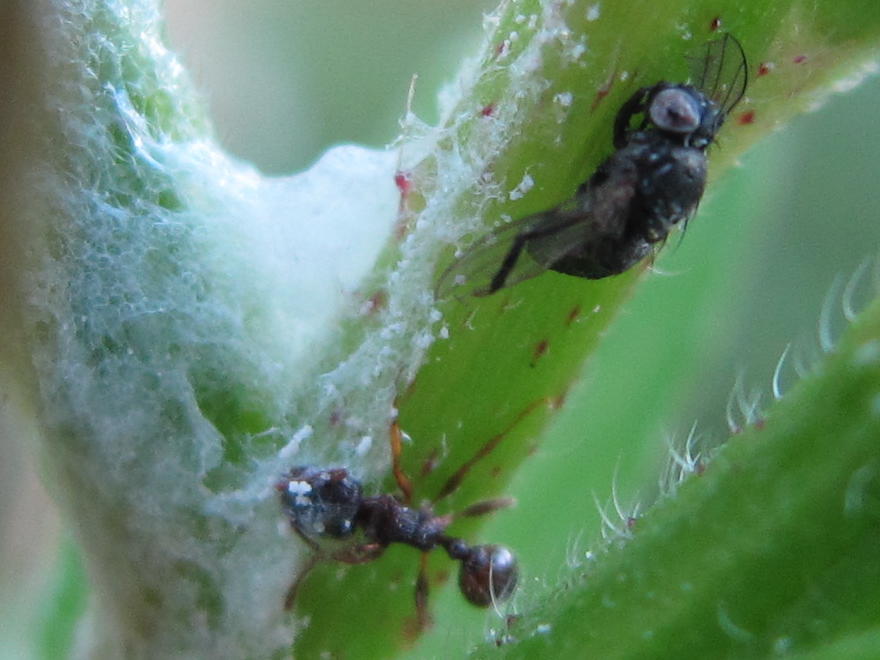
The foam is apparently a tasty, but dangerous treat for many
insects. This ant and fly seem to have
gotten stuck and perished in the sticky substance. Even if the Evening Primrose didn’t have such
nice flowers, the insect interactions alone would be worth having a few of the
plants around.