Twenty years ago, I decided that I needed a place where I
could grow some of the interesting plants found at Blue Jay Barrens that would
allow me to view them daily and learn something about their growth
patterns. I gathered seed from various
places around the property and in the summer of 1995, planted that seed in a
front yard location with such poor soil that typical lawn grass had trouble
growing. I thought this would best
simulate the stressful conditions found in the barrens from which the seed originated. The Prairie Garden took off and is now about
twice its original size.

In addition to planting seed directly onto the Prairie
Garden site, I attempted to grow some of the uncommon species in pots for later
transplant. I had limited success, but managed
to get a few plants. Seed had been
collected and stored, and then stratified or scarified as suggested by several
texts I consulted. I soon learned that
most seed, such as that from this False Gromwell, Onosmodium molle var.
hispidissimum, does best when planted in pots at the time it falls from the
plant and then allowed to experience natural weather conditions until its
natural germination time.

My original idea was to have each plant species growing in a
certain location so it would be easy to find and observe. This was the case for the first few years,
but the plants soon began behaving as they do in the wild. I had three of these American Aloes, Agave
virginica, that survived transplanting and grew to flowering size. Two are still persisting, but their offspring
are scattered around the garden. With many species, the initial planting has
died, but younger plants have taken their place.

Even though my goal was to showcase uncommon species, I
included several common species in the mix.
Gray-headed Coneflower, Ratibida pinnata, is a very common prairie
species in this area.

Gray-headed Coneflower was the first prairie species I found
on this property after its purchase 30 years ago. About a month after moving in, I was on my
way home from work and passed a small plant growing out of the loose stone on
the edge of the road just in front of the house. At that time, I had not had an opportunity to
explore any of my newly acquired property, so I didn’t know that in just a few
weeks this species would be blooming everywhere. Fearing that the plant was in danger of being
destroyed by passing traffic, I grabbed a shovel and transplanted the
coneflower to a spot near the edge of the yard.
It prospered in its new location and produced many new blooms through
the summer.

I planted a single grass species, Side-oats Gramma, in the
Prairie Garden. Besides being a lovely
plant, it only grows a few feet tall. I
thought the short stature of the grass would make it easier to keep track of
the other plants.

The Side-oats Gramma can still be found in the garden, but
it is no longer the only grass. Indian
Grass soon found its way here and now dominates about a third of the garden
area.

Some of the wildflowers bloom early in the season while the
Indian Grass is still short. Others,
like the Western Sunflower, Helianthus occidentalis, grow along with the grass
and later produce tall flower stalks. In
August, these Western Sunflower plants will top out at over six feet. Their flowers will be held up above the thick
mass of grass leaves where they will attract a variety of pollinators.

Allegheny Mound Ants maintain a single residence in the
center of the Prairie Garden. Their
appearance was the result of a colony migration, with a three foot diameter mound
being created in just a few weeks. Once
the mound was established, the ants proceeded to eliminate selected nearby
plant species that apparently posed a threat to the colony. Spider Milkweed, Asclepias viridis, an
uncommon species that I had planted here, was eliminated soon after the ants
arrived. Other species, such as this
Round-podded St. Johnswort, Hypericum sphaerocarpum, are allowed to grow right
up to the edge of the mound.

An extension to the garden was added a few years ago. Since I know that grass will eventually
colonize this area, no grass was planted in the addition.

Purple Coneflower, Echinacea purpurea, was represented by
only a few plants when I first discovered it on the property 30 years ago. Their numbers were so few when I first
created the Prairie Garden that I didn’t take any of their seed for that
initial planting. Clearing away cedars
and other woody growth allowed to plants to flourish, so there was an abundance
of seed available for this recent planting.
The addition of colorful plants makes it more likely that passersby will
consider this an intentional creation and not just a random patch of weeds.
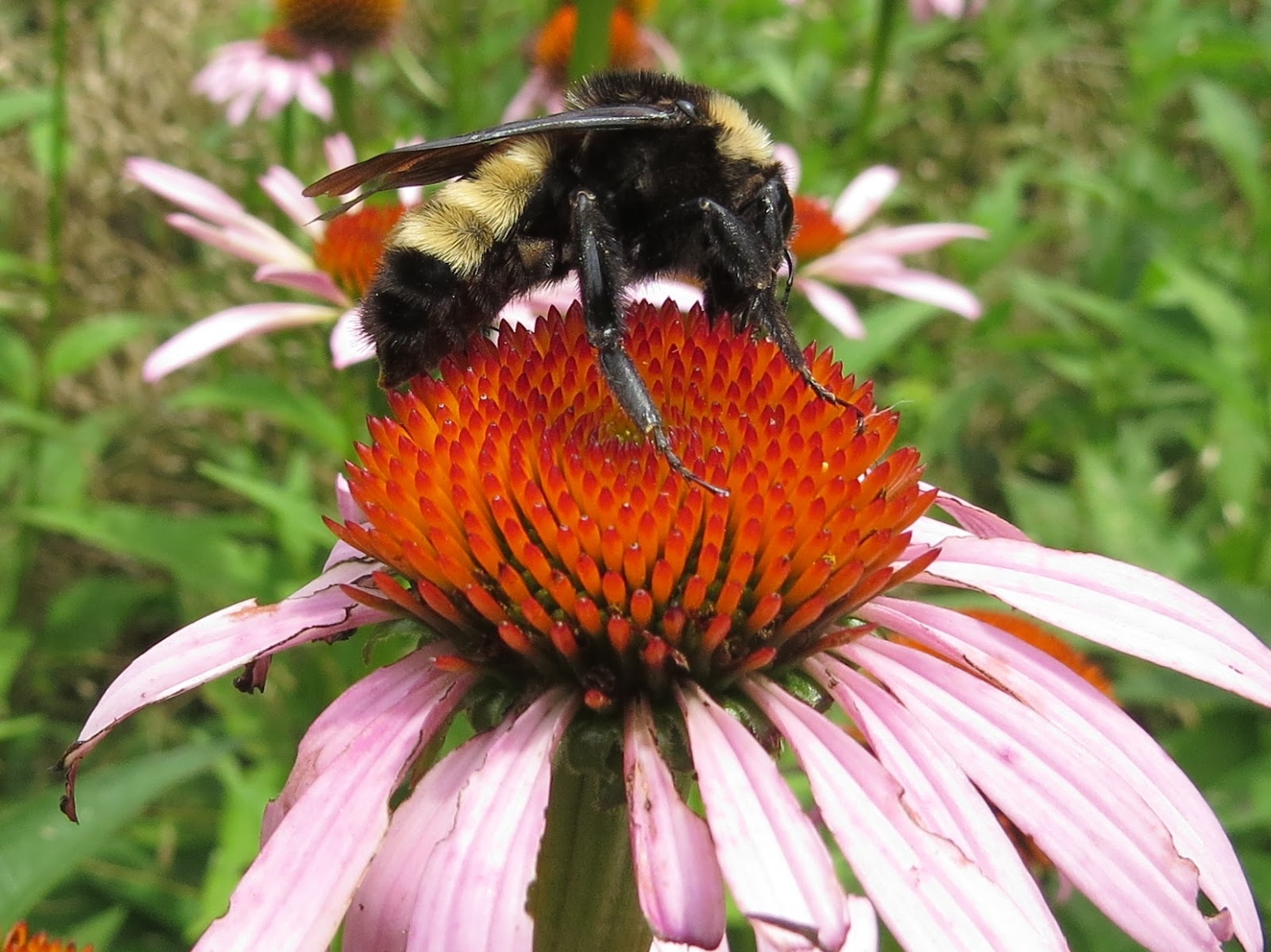
Purple Coneflower is also eagerly sought by many pollinator
species. In most years, butterflies are
the dominant visitors of these plants.
So far, Bumblebees are outnumbering butterflies by several to one at all
of the nectar sources. Conditions this
past winter must have been perfect for Bumblebee queen survival.

The Prairie Garden spawned this patch of prairie vegetation
growing along the driveway. I refer to
this as the Prairie Garden Annex. I am
thinking of expanding the garden to tie in with this area.

The Annex grew up around this patch of Northern Fogfruit,
Phyla lanceolata. I found the Fogfruit
growing at the edge of the driveway several years ago. I was curious about its origin, whether it
was already on the property or if the seed had been carried in on some visiting
vehicle. I decided to let it grow to see
what developed, but people kept running over it. When the Indian Grass began to grow here,
people must have gotten the idea that I wanted those plants to stay, because
they stopped driving there. I allowed
the Indian Grass to spread as a further deterrent to vehicular traffic.

My original intent for this project has been realized. Developing the Prairie Garden has allowed me
to observe the growth of plants in a way that was not possible in their natural
sites far from the house. I hope to
continue increasing the size of the garden and to establish additional uncommon
species to the mix.