Showing posts with label Rose Pink. Show all posts

Friday, March 7, 2014

Draba Barrens Check

With the south facing slopes finally cleared of snow I was able to get out and assess the current state of plant growth in the barrens.  Since I’ve been following the progress of the container grown rare winter annuals, I was anxious to compare that impressive growth with the condition of the wild grown plants.  The big three species at Blue Jay Barrens are Leavenworthia uniflora, Draba cuneifolia, and Draba reptans.  All three grow in barrens areas typified by bare soil conditions and excessive dryness.  This site is one in which the Drabas seem to dominate.


Bare soil of the barrens is not always evident from a distance.  Plant spikes make an effective barrier and give the illusion of solid vegetation.


It’s not until you are in a position to view the ground from a more aerial perspective that the patches of soil become apparent.  Tufts of grass sit like a thousand islands with channels of soil running between.  The grass plays an essential role in protecting the soil from wind and rain.


In some areas a thin layer of dark soil exists.  The protective grass has not only offered protection, it has provided organic matter to fuel the soil ecosystem.


The typical barrens soil presents a less prosperous appearance.  A gardener faced with soil like this would probably begin looking for a new hobby.  However, for some special plants, this is the ideal home.


The layers of small pebbles associated with many of the barrens are a result of erosion.  Rainfall has broken the soil into its individual particles and the smaller of these have been carried down slope with the runoff water.  Left behind were the small stones and pebbles that form a protective layer over the soil surface.  The energy of the rain is now spent on the stones and the soil is left in place.


Other factors also assist in keeping the barrens soils in place.  Moss and lichens are two plants that tend to bond organic matter into a living mat that is much more rain resistant than the bare soil.


In some of the larger areas, annual grasses provide temporary winter cover.  The dried grass plants shown here are Sporobolus vaginiflorus, a low growing annual that thrives in hot, dry areas.


Other plants grow in the barrens soil, but often suffer from the elements.  This Rose Pink, Sabatia angularis, has lost several of its leaves from exposure to extreme cold temperatures.  The plant is still alive and will recover from this setback.


It only takes a little protection for a Rose Pink to make it through the winter unscathed.


A barrens plant that doesn’t seem bothered by the coldest of temperatures is Gray Goldenrod, Solidago nemoralis.  The perky little basal rosettes wait patiently until longer daylight hours spur them into growth.


I did find a few Draba cuneifolia, but they were much smaller than those grown in my artificial container barrens.  Drabas require full sunlight during their growth period and will quickly flower before the surrounding vegetation grows high enough to produce shade.  I’m sure they will prosper and produce a good supply of seeds for future years. 

Sunday, August 19, 2012

Uncommon White Flowers

All species show variations, but I think those differences are most noticed when they deal with color.  Every year I find a few plants with flowers displaying white petals instead of their normal hue.  These two diminutive Rose Pink plants were growing side-by-side; one with white petals and the other with standard pink petals.  This species produces a few white petaled individuals each year.

The dry prairies are filled with Hairy Small-leaved Tick Trefoils with their long stalks of lavender blossoms.  I shouldn’t have to point out the obvious face showing in each bloom.

One lone plant is producing stalks of white flowers.  From a distance, the white blossoms are much easier to see.

Sadly, the face is not nearly as evident in the white flowers. 

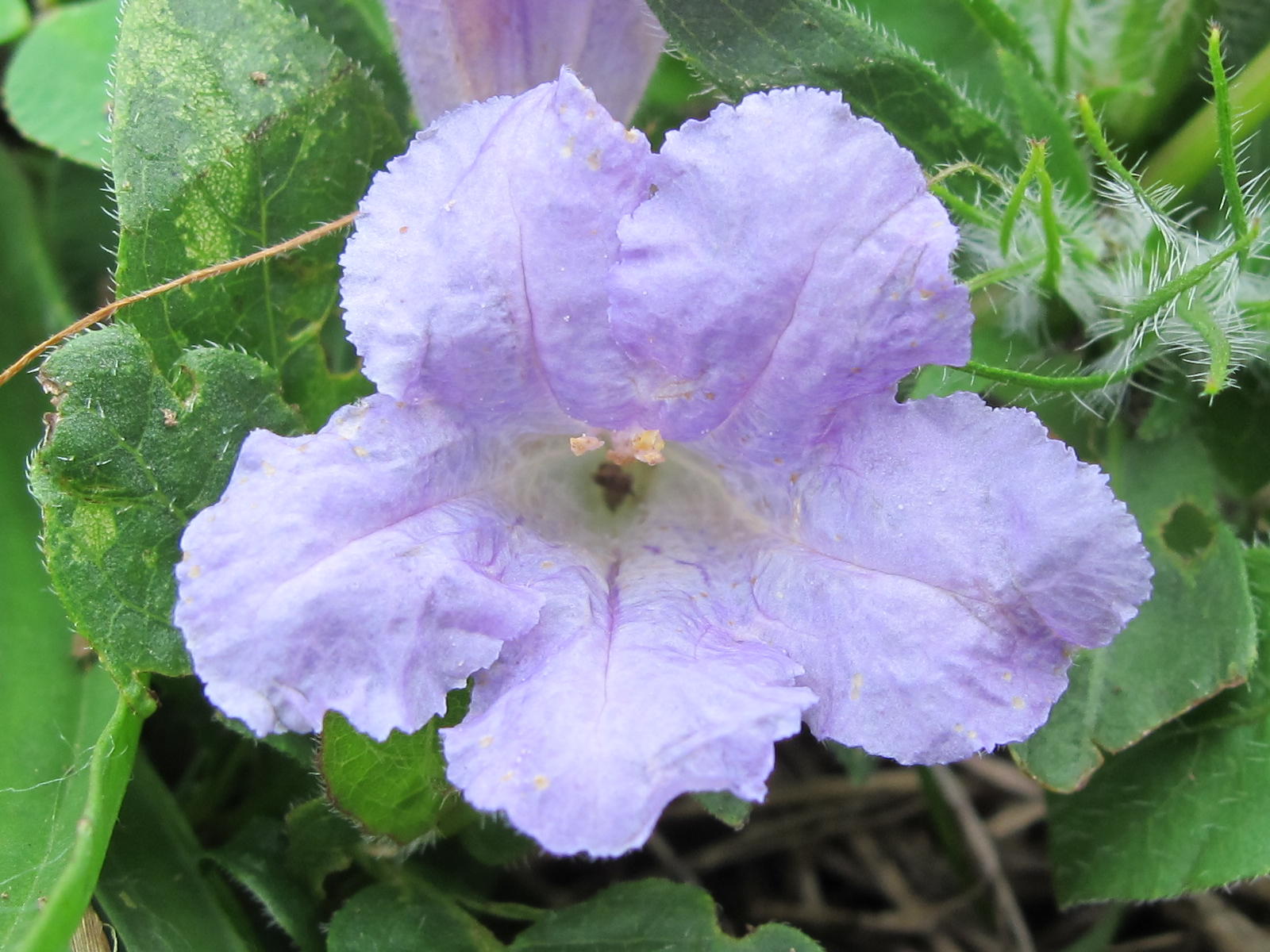
The Wild Petunia regularly displays petals in varying shades of blue and lavender, but the differences are not enough for the casual observer to notice.

When the Wild Petunia shows itself in white, the blossom stands out from the crowd.  As a manager of wild plant populations, I enjoy seeing these variations.  A wide range of genetic choices is an indicator of a healthy population and makes that population more resilient and able to survive environmental changes.  Flower color may mean little to the future survival of a species, but these visible signs of genetic diversity suggest that there is also much genetic variation present that is not so easily detected. 

Friday, August 17, 2012

Blooms on the Dry Prairie

Growth on the prairies is mimicking that of the Prairie Garden.  That’s encouraging, since that’s how I had hoped my artificial creation would act.  However, the actual growth is less than encouraging.  This area of short grass is typically dotted with bright color at this time in the season.  The color this year is almost entirely pale green.

Some plants are actually doing well despite the odd weather.  Little Ladies’ Tresses, Spiranthes tuberosa, is looking very well.  Its full height of about six inches is just not enough to make it very noticeable.

Petals of the Spiranthes flower never look quite real.  I always imagine them as being made of ice crystals or clear plastic.

Whorled Rosinweed blooms are a bright yellow that should be visible from a considerable distance.

Unfortunately, instead of their normal five foot height, the plants are averaging closer to 18 inches.  The plants are also producing just a single bloom instead of the usual half dozen.  The flowers are well hidden by the grass.

Flowering Spurge is similarly diminished this year.  The plants normally top out around three feet tall.  These are lucky to reach a foot.

Bluehearts have remained relatively unaffected.  Height is slightly reduced, but the flower spike is just as full as ever.  Their blooms are too small to be easily seen at a distance, so they don’t do much to brighten the landscape.

As with those in the Prairie Garden, the Round-podded St. Johnswort is producing a new set of blooms.  The recent rains must have really invigorated this species.

Rose Pink continues to bloom.  This species has been blooming for the last couple of months and shows no signs of slowing.  Some of the early bloomers are already drying down and releasing seed.

Partridge Pea is blooming at a normal rate.  This species has the potential to form tall plants with many flowers, but Blue Jay Barrens specimens are always small and only produce one or two flowers.  I may collect a few seeds from this annual plant and see how large the plants get when given good soil and plenty of water.

Hairy Small-leaved Tick Trefoil always does well and this year is no exception.  The flowers are not large enough to make a showy display, but there will be enough sticky seed pods this fall to cover a person’s pants legs as they walk through the field.

Another specimen of the same Trefoil species appears to have grown with its flower stalks fused.  There are always oddities of some sort showing up in the fields.  I would prefer to find oddities that turned out to be species I have not yet encountered.  It’s getting to be too late in the season for the prairies to suddenly burst with color.  Next year has got to bring a better display.

Friday, July 20, 2012

Rose Pink in a Drought

The drought has caused shortened growth and aborted flowering attempts in many plants.  Rose Pink is an exception and has flowered on schedule and in greater than average numbers.

Even so, the Rose Pink blooms are short lived and the petals quickly fade as energy is put into seed production.

Rose Pink grows on some of the driest and most barren sites.  Grasses and other prairie flowers would normally obscure the clusters of pink blooms, but this year’s short growth leaves the Rose Pink out in the open.

Even though they are doing well, the Rose Pink plants are showing obvious signs of drought stress.  No matter how well developed the root system, it’s hard to find any moisture in the steep, rocky soil.

Despite the dryness, flower buds remain hydrated and the flowers open normally.  The one odd thing I’ve noticed is the absence of any odor.  Rose Pink flowers are very fragrant.  The scent of several dozen clustered plants can be detected at quite a distance.  I wonder how the absence of fragrance will affect the number of insect visitors aiding in pollination.  A Rose Pink flower releases its pollen prior to the stigma being ready to accept it.  This method increases the chances of pollen from another plant fertilizing the flower.  Self fertilization is possible, but that method is likely to produce fewer seeds. 

Rose Pink is a biennial plant, meaning that its life cycle is completed in two growing seasons.  During the first year, the plant puts down a deep root system and forms a rosette of leaves at the ground’s surface.  In year two it flowers, produces seed and dies.  Unlike perennial plants, the Rose Pink cannot abort flowering and wait for the next season.  If no seeds are produced, there are no plants for coming years.  Every bit of energy in this plant is focused on seed production.  I hope it’s successful.

Rose Pink population size fluctuates widely from year to year.  I’ve watched it survive a wide range of weather conditions and I’m sure this year will be no exception. 

Monday, February 20, 2012

February Prairie Greens

The prairies always look their most desolate in February.  The grasses have weathered several winter storms and have lost most of their bright colors.  Add to that the fact that I’ve been looking at the same brown color for three months and you can understand why I make an annual February search for growing plants hidden beneath the drab grasses.

I have to give credit to some of the grasses for maintaining a remnant of their fiery brightness through the winter.  Elliott’s Beard Grass adds a flash of color to the winter prairie landscape, but I’m looking for some living plant parts.

Hidden within the tall grasses, Blue-green Sedge has fresh green leaves throughout the winter.  Long periods of freezing days with no snow cover sometimes browns the leaf tips, but it’s evident that this species is adding new growth at every opportunity.

Gray Goldenrod also slowly adds growth through the winter.  This is the normal condition for these native plants.  Unlike some cultivated plants that are putting on early growth because of the mild winter, the native plants are responding to other cues and growing according to their natural pattern.  They will survive and prosper no matter what variances in winter weather may occur.

For many native plants, day length is a stimulus that moves them from one stage of growth to another.  Rose-pink basal rosettes remain small but active during the winter.  No matter how warm the February days, the plants won’t enlarge and prepare to flower until the proper time in the spring.  Rose-pink is a biennial that depends on its crop of seeds to insure future generations.  If plants like these couldn’t time their flowering to best advantage, the species would not persist.

Pasture Thistle is another biennial that is regularly active through the cold season.  The number of winter rosettes gives a hint to the number of blooms you’ll see later on.  This plant is a particular favorite of mine.  The bright purple thistle flowers are a lead in to the prairie blooming season.  The thistles sort of set the mood for what’s to come.  Indications today, forecast a very colorful prairie this summer.

Monday, July 20, 2009

Rose Pink

This is Rose Pink, Sabatia angularis, the most fragrant summer bloomer on the prairies of Blue Jay Barrens. When a lot of these plants bloom together, the sweet scent is almost overwhelming.

It looks like the Rose Pinks are going to have a very good year. This plant has just begun to bloom and you can see a mass of buds that will soon make this plant a solid mound of pink.

Here’s a plant that’s a bit farther along, but there are still a lot of blooms yet to come.

Rose Pinks can grow in some of the harshest conditions. The plant is a biennial, taking two years to reach the blooming stage. Two good growing seasons in a row can result in the fields being an almost solid pink. This is a more typical year. The plants are plentiful, but not dominant in the landscape.

The flower typically has five petals, but sometimes you’ll find a bloom with six. This abnormality is normally seen as one or two blooms amongst a plant full of normal flowers.

Most plants show a range of characteristics as part of normal genetic variation. I suppose, if Rose Pink were produced commercially, the plant breeders would work hard to perpetuate this six petal variety.