It’s been a few years since Monarda fistulosa has bloomed so
prolifically in this opening at Blue Jay Barrens. Something about the environmental conditions
during the winter or spring of 2011 caused a massive die-off of Monarda plants
in this patch.

During the past few years, Monarda has returned and is now approaching
its earlier abundance. With the return
of the plants comes a return of the butterflies. Monarda attracts a variety of pollinator
species, with large butterflies being the most notable.

At the small end of the size scale is the Silver-spotted
Skipper. Smaller butterflies, which
includes the other skippers and many butterfly species, seem to find the
Monarda flower head difficult to handle.
As if in celebration of the return of the Monarda, Silver-spotted
Skippers are around in record numbers this year.

The showiest of the butterfly visitors are the Swallowtail
species. This is the Spicebush
Swallowtail. Its habit of constantly
fluttering its wings while feeding makes it difficult to photograph.

Blooming of Monarda seems to coincide with the emergence of
the summer brood of Tiger Swallowtails.
Summer brood individuals are typically larger than those found earlier
in the year and they are quite showy as they glide between Monarda blooms. There are those that exhibit the typical
yellow coloration and …

… others that are colored a silky black. Despite their black coloration, the tiger
stripes still show through.

I found it interesting that the swallowtails all seemed to
feed while hanging from the side of the flower head.
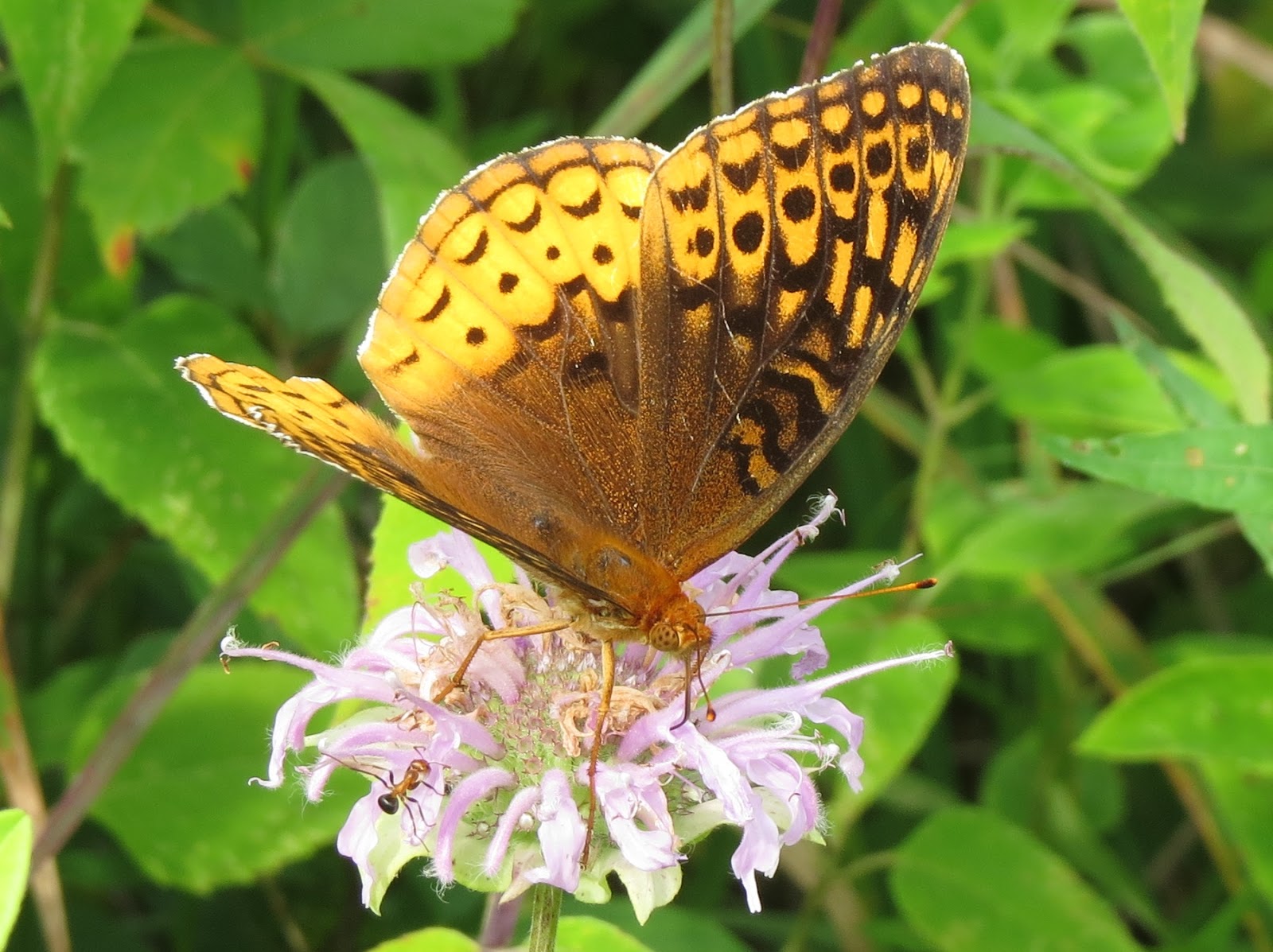
Great Spangled Fritillaries, however, tended to do their
feeding while perched atop the flowers.

The Monardas have even attracted a few Giant
Swallowtails. The Giant Swallowtails
quickly move from flower to flower, spending so little time nectaring that I
sometimes wonder if the act is even beneficial. Finding them at flowers is about the only way
to get a decent look at these fast fliers.

The Monarda is most famous as an attractor of Clearwing
Sphinx Moths. Using their front legs as
anchors, Hummingbird Clearwings hover next to the flower as they draw
nectar. This species is currently outnumbering
butterflies in the Monarda patch.

A few Snowberry Clearwings are also present this year. Slightly smaller than the Hummingbird
Clearwings, the Snowberries feed in a similar manner. This is a species that I don’t often see
here.

The Monarda’s attractiveness is not diminished by
darkness. A variety of moth species
visit the flowers through the night. The
lack of multiple examples of nocturnal visitors more accurately reflects the
photographer’s skills than it does the true number of night-time pollinators.