Before I propped it up on a convenient gravel bar, this
young Arrowhead plant, Sagittaria brevirostra, was riding the creek currents on
its way out of Blue Jay Barrens. I’ve
never before collected anything but seed for my propagation studies, but I
thought, since it was leaving the property on its own, I might has well transfer it to a pot and watch its development.

Survival of the specimen should be easy. The plant already possessed a healthy root
system and a tuber packed full of energy.

I find the Arrowheads typically growing in mud banks
developed on the insides of creek curves.
These mud banks are transient, growing and shrinking at the whim of an
unpredictable flood cycle. Sometimes,
entire colonies of the plants are lost to a particularly violent flood. I imagine those plants travel downstream with
the possibility of colonizing a new mud bank.

The plant was moved from the creek to a pot on May 20,
2015. Two months later, the pot was
filled to capacity with plants. I
emptied the pot and began to separate the plants in preparation for repotting.

Each new plant was equipped with a profusion of roots and rhizomes. It was easy to see that a single plant
finding its way to a suitable site could quickly produce a large population.

What once filled a single pot, seemed still crowded when
spread into three.

The original rescued plant was the only one of the bunch
that was not growing tall and straight.
When removed from the original pot, its roots were still near the
surface of the soil as originally planted.
The rest of the plants arose from rhizomes that had penetrated to the
bottom of the pot.

By early August, the plants were flowering.

This Arrowhead species produces individual male and female
flowers. A small fly visits this male
flower. Small bees and flies were the
most frequent visitors to the arrowhead flowers.


The individual fruits are clustered to form a spiked ball. Each fruit, achene, bears a single seed.

Shape of the mature achene is one characteristic used in the
identification of species within the genus Sagittaria. Achene shape can vary greatly among different
plants of the same species and also within a single flower, so one should never
be comfortable with an identification based on a single achene.
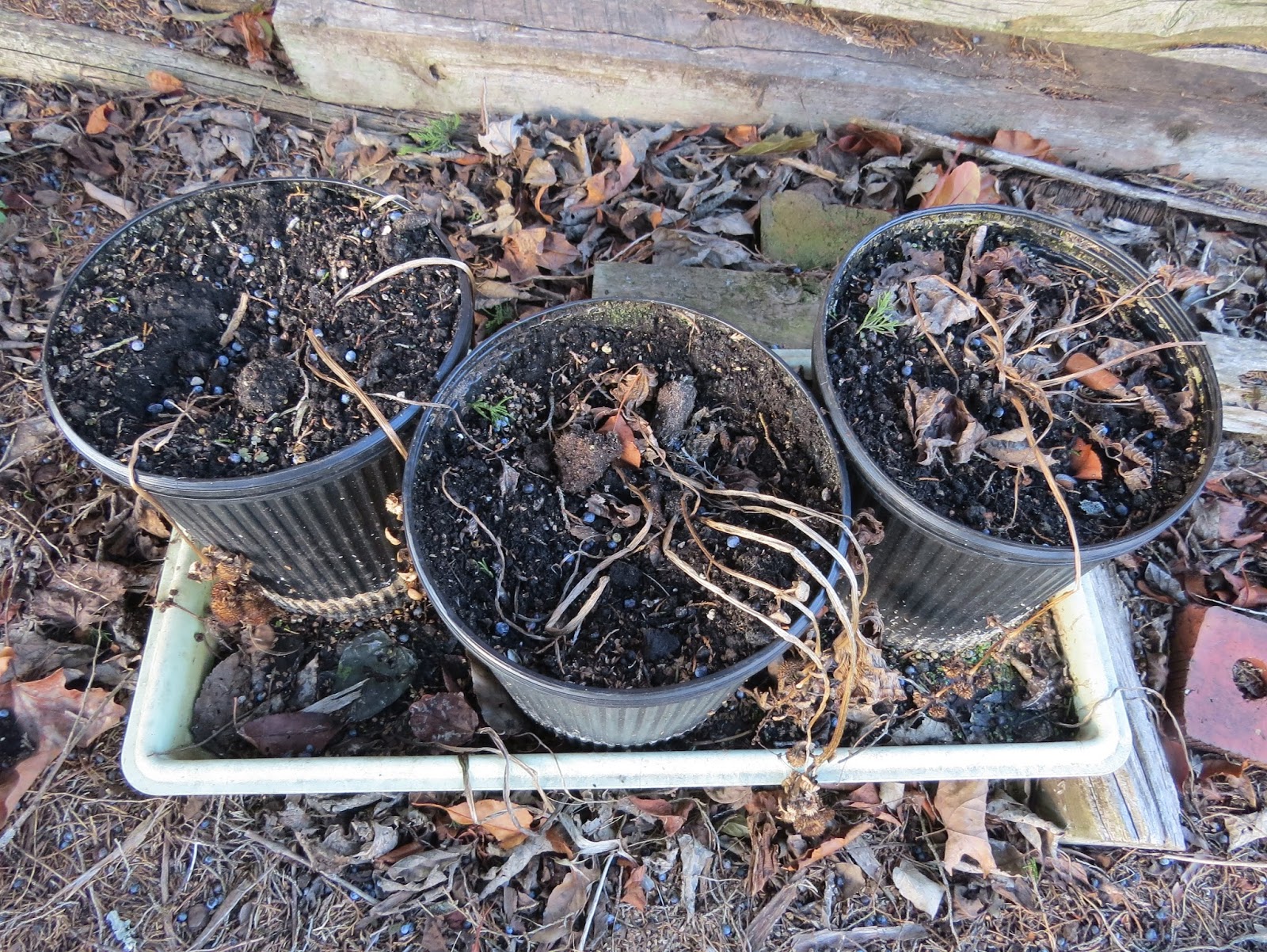
This species has little tolerance for the cold and was
zapped by the first hard frost. Plants
in the creek grow where the creek water keeps the soil at a temperature above
freezing.

I didn’t think the plants would survive their pots freezing
solid, so they will spend the winter buried in a leaf filled pit with a loose
covering of boards. It would take a
record cold year for freezing temperatures to reach the pots stored here.