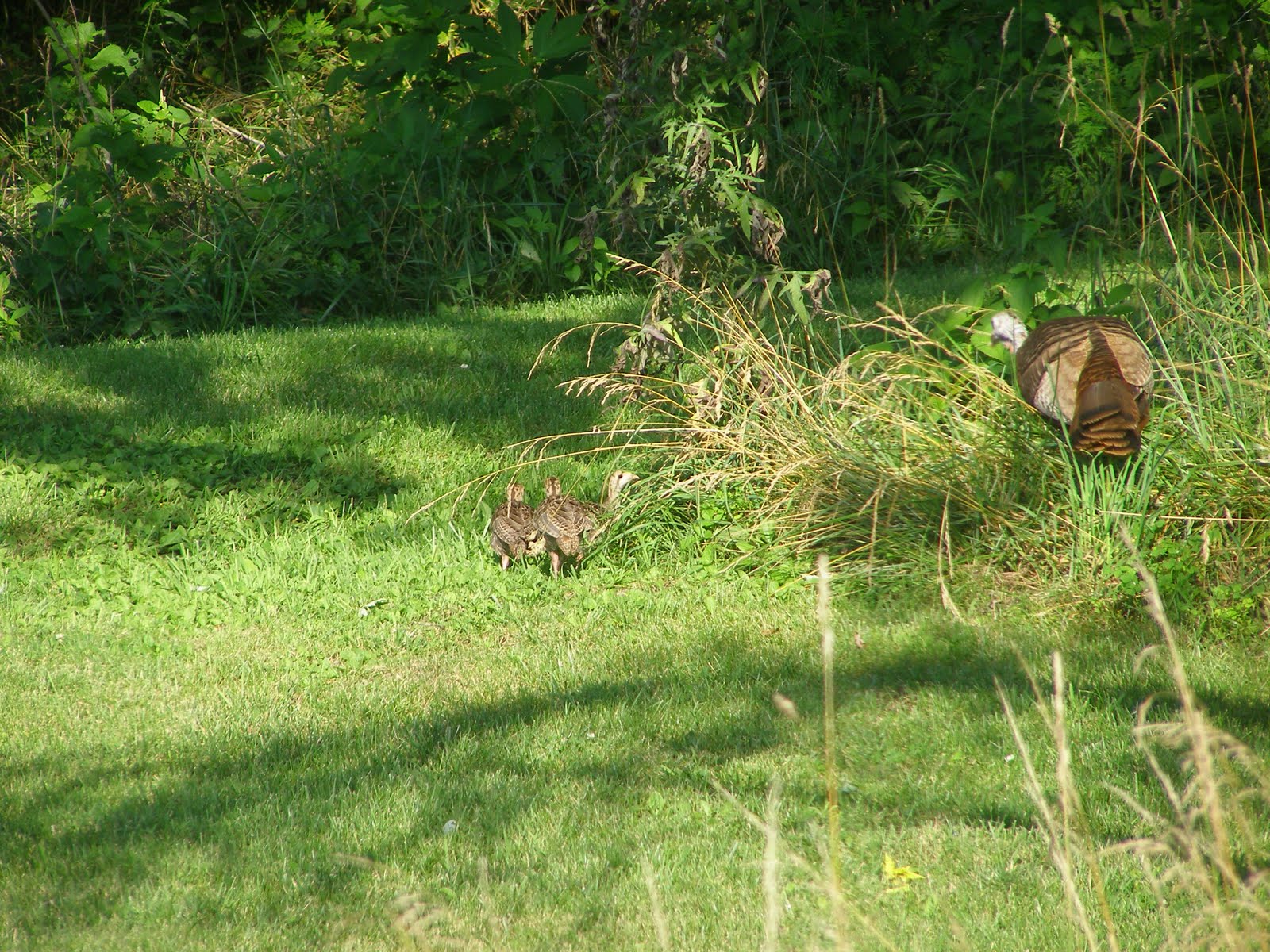
These are the same two Wild Turkey hens that I showed four weeks ago. At that time, there were ten young birds, three larger and seven smaller. Now there are only four youngsters. It’s possible that they joined another brood and are now following a different hen, but it’s more likely that they were lost to predators or the weather.

Three of the smaller and one of the larger poults have survived. At this age they are more interested in eating the cracked corn. They can clean up a lot of corn in a hurry.

Looks like I’ve been spotted. I was beside the house when the turkeys came into the yard, so I just leaned up against the wall and held still. They were so anxious to begin eating corn that they didn’t notice as I slipped my camera from its holster and powered up. Now that they’ve had a good meal, they’re beginning to wonder what I am. The youngest three still don’t know anything’s going on.

I wasn’t scary enough to make them run away, but they did move out and head back toward the field. It’s actually a good thing that so few of the poults make it to adulthood. Having the flock size increase by three or four times would really have a devastating effect on the landscape.
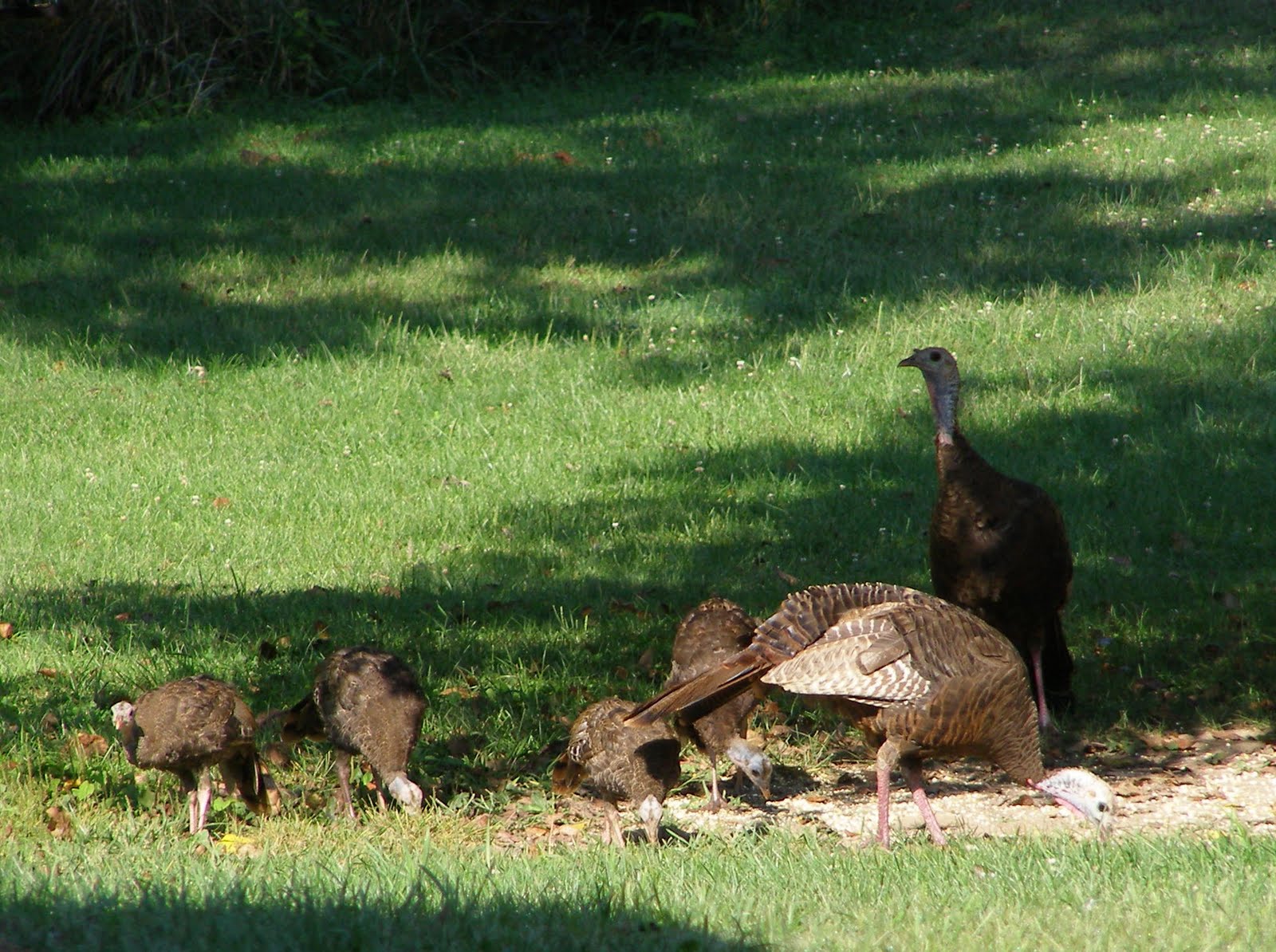 These are the same two Wild Turkey hens that I showed four weeks ago. At that time, there were ten young birds, three larger and seven smaller. Now there are only four youngsters. It’s possible that they joined another brood and are now following a different hen, but it’s more likely that they were lost to predators or the weather.
 Three of the smaller and one of the larger poults have survived. At this age they are more interested in eating the cracked corn. They can clean up a lot of corn in a hurry.
 Looks like I’ve been spotted. I was beside the house when the turkeys came into the yard, so I just leaned up against the wall and held still. They were so anxious to begin eating corn that they didn’t notice as I slipped my camera from its holster and powered up. Now that they’ve had a good meal, they’re beginning to wonder what I am. The youngest three still don’t know anything’s going on.
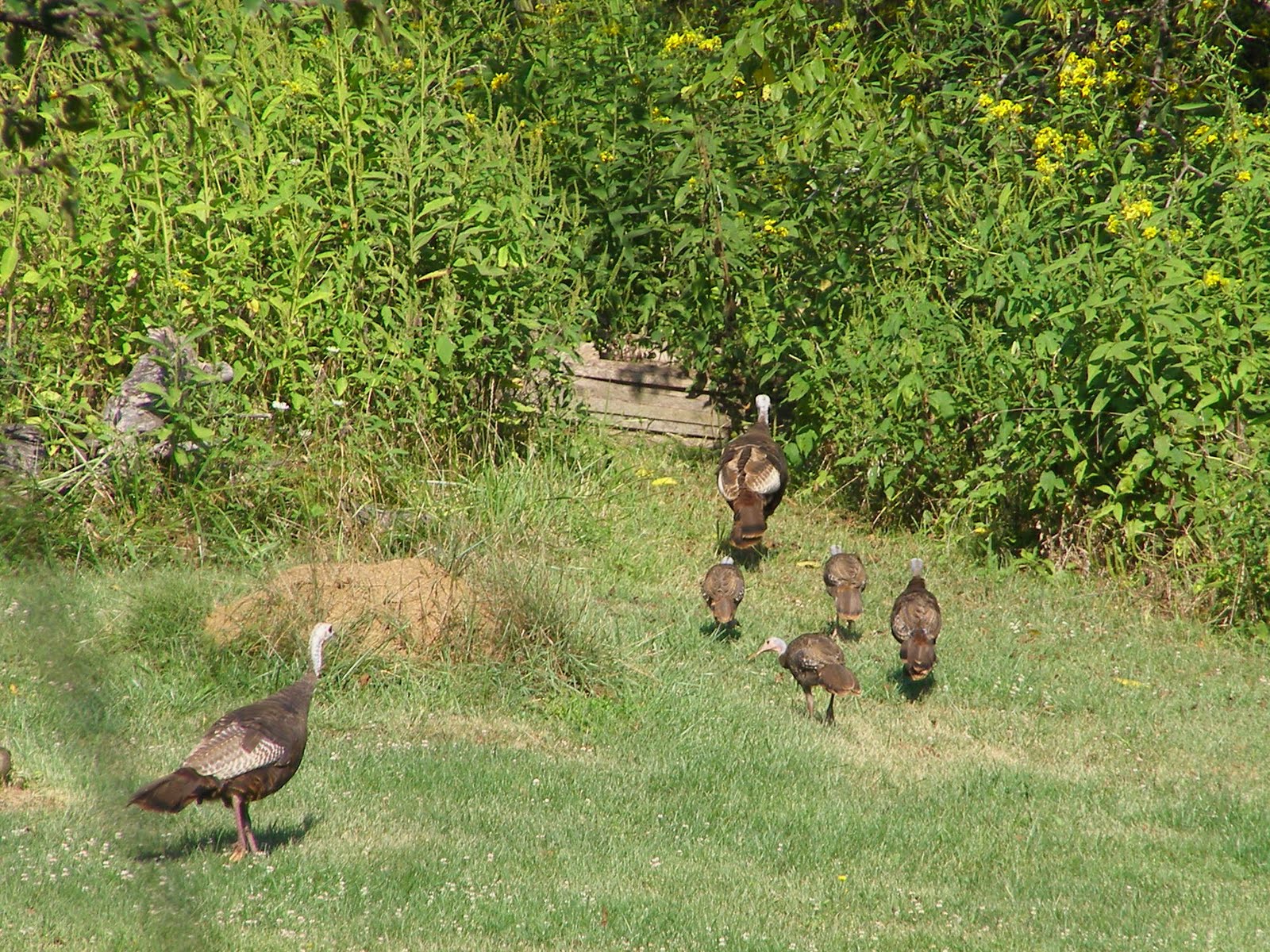 I wasn’t scary enough to make them run away, but they did move out and head back toward the field. It’s actually a good thing that so few of the poults make it to adulthood. Having the flock size increase by three or four times would really have a devastating effect on the landscape.